Lily House Studio
A studio about growth.
Lily House Studio / Meet the Pod

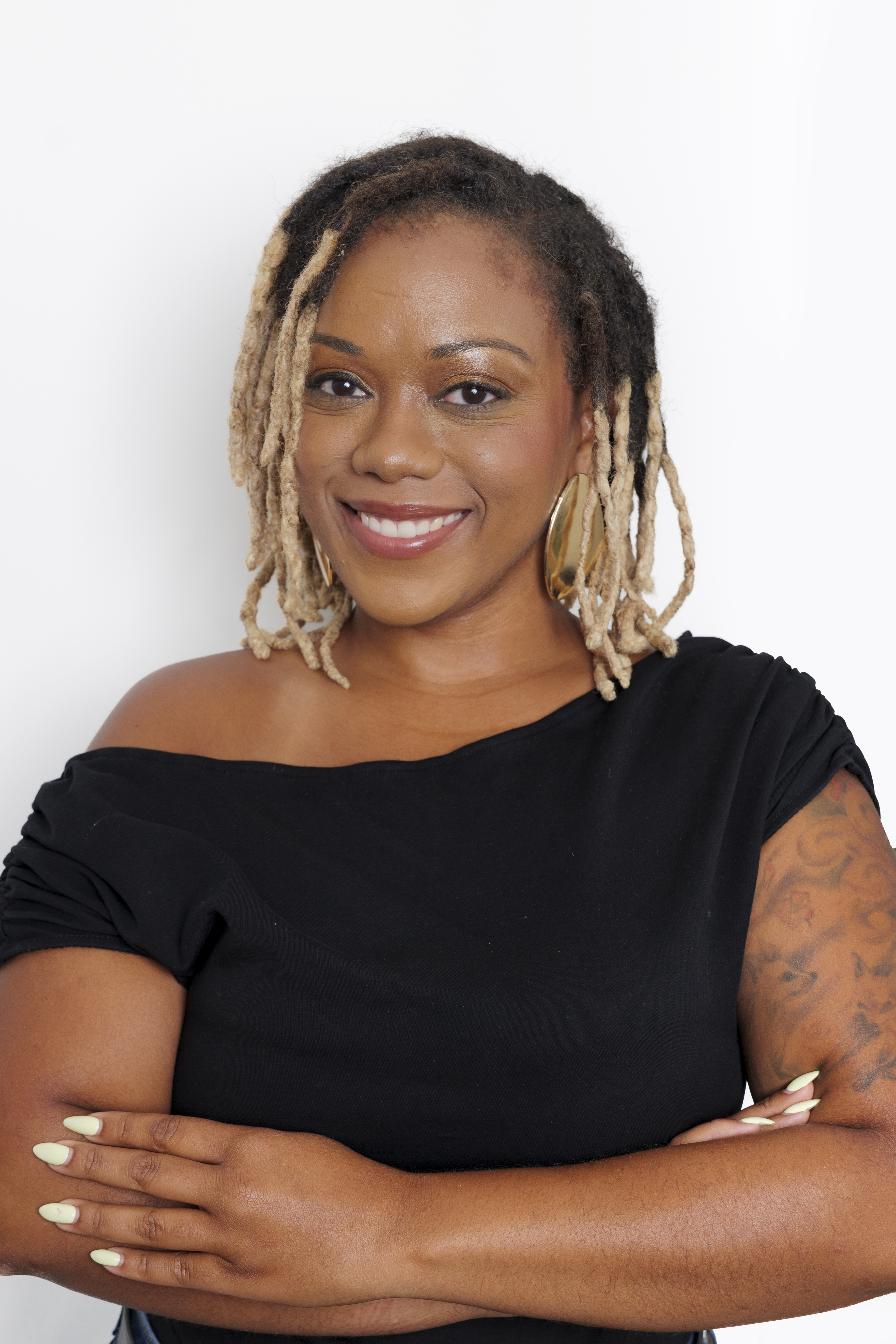
Jhaynane Bastien.

On losing the plan, learning to need people, and building the kind of support she couldn’t find.

September 9, 2026
Jhaynane Bastien
Founder & Studio DirectorLily House Studio
The person behind the first Pod

Jhaynane (pronounced JAY-NAAN) Bastien did not set out to become the protagonist of her own work. After a car accident changed the shape of her days, the project that began as a way to document recovery became a larger question about what happens when the life you planned stops being available to you.

What followed became In Search Of… Healing, Lily House Studio, and a different way of thinking about making work: less alone, less polished, and more interested in what it actually takes to become.

Chapter 01

The Plan

01

What did the accident change about the life you thought you were supposed to have?

Before the accident, I was working on a completely different project. I had pictured my life as being much easier than it turned out to be. I thought once I got that project off the ground, everything would click into place, and I would be further along by now.

What I was really holding onto was a specific outcome for how life was supposed to turn out. That’s not how life actually works, and that was a hard truth I resisted for a very long time.

There’s that saying that when you make a plan, God laughs. That’s how I see life now. I can make a plan and work toward it to the best of my ability, but I’ve loosened my grip on control enough to let life surprise me. For somebody who hates surprise parties—or surprises in general—that has been a very challenging adjustment.
02

Why did getting outside start to feel so important?

Being stuck inside those four walls made me crave being outside. I’m a homebody—I love being home—but being pretty much bedridden for months will make even an introvert want to run outside.

I wanted to revisit places that had given me escape or freedom before, and finally go to the bucket-list places I kept putting off because life always happened. I got tired of life happening to me. I wanted to start living life.

Jhaynane Bastien
“I got tired of life happening to me. I wanted to start living life.”
03

Why the American West?

Once I knew I wanted to get outside, the West became part of the search. I wanted to learn from the people I met, their stories of resilience, and the places themselves.

I’m from Maryland, right outside Washington, D.C. I can tell you the story of the thirteen colonies back to back. But I’ve lived on the West Coast for at least ten years and still know so little about the American West. I wanted to finally go to the places I kept putting off and understand more of the region I had been living in. That curiosity became part of the journey too.

04

Why did you finally let yourself become the protagonist?

I didn’t set out to tell my story right away. My focus was the people I met—their stories, communities, work, experiences. I put myself in the background.

But as I worked on it, the story felt empty. Why was I going on this trip? Why was I meeting these people? What was my purpose in the story?

That’s when I realized every good story needs a protagonist, and the protagonist just happens to be me. The audience needed an anchor. Without one, they would meet a new group of people every episode with nothing connecting it all. I had to be that anchor.

Chapter 02

The Rebuild

05

What did you have to stop believing about yourself in order to start over?

I had to stop believing that needing other people meant I was incapable. For a long time, I equated being competent with being able to handle everything myself. I’ve had to loosen my grip on that.

I live in Los Angeles, and I don’t have a real support system here. Most of the people I know are on the East Coast or somewhere else in the world. After surgery, a friend came up from San Diego to help me. I didn’t ask her to, but I had to learn to be okay with receiving that help instead of immediately trying to prove I could manage without it.

That has probably been one of the harder parts of starting over: learning that independence and isolation are not the same thing.

06

What would have happened if you never made this project?

I would have lost my mind.

This project was my escape. I haven’t been able to sit for long periods of time or stand for long periods of time, and for a while I couldn’t type normally either. I’ve spent so much time on my couch trying to navigate doctors, insurance, paperwork, pain, and everything in between.

Being locked in a house staring at white walls for hours will do something to you. I needed somewhere for my mind to go. Social media wasn’t doing it, and the endless streaming catalog definitely wasn’t doing it. The project gave me somewhere to put my attention and imagination.

07

What are you trying to get back—and what are you okay leaving behind?

I stopped believing in “getting back to normal” a long time ago. Having my daughter taught me that first. There’s no way to go backward. What I want now is to get back to baseline—to live without chronic pain.

I want to sit comfortably in a chair and watch a movie. I want to hug my daughter and carry her before she gets too big. I want to type with my index finger and my thumb again instead of finding workarounds for basic things I never used to think about.

The part of myself I’m trying to get back is my ability to move through the world without constantly negotiating with my body. I’m a doer. When you’re a doer and suddenly you can’t do as much as you want to do, it messes with your identity.

What I’m okay leaving behind is the hyper-independence. I see the necessity of having a support system now. Doing it all on your own is not what it’s cracked up to be.

“The project gave me somewhere to put my attention and imagination.”
Jhaynane Bastien
Chapter 03

The Pod

08

When did you realize the story was bigger than something you could make alone?

Joshua Tree was supposed to be a nine-minute YouTube video. Nothing too fancy. But once we were on the road, talking to people and seeing these communities, it was like a lightning strike hit me in the head: there’s a real story here.

I was trying to be the host, the producer, and the director—trust me, I tried. But those are different jobs, and the bigger the story became, the more obvious it was that trying to hold every role myself was limiting the work.

That was the moment I understood the project needed more than my vision. It needed people with their own expertise who could make the story better than I could make it alone.

09

Why are you willing to let people see the messy part?

I’ve always loved hearing stories about people who made it, but my question is always: how did they get there? That’s why I love memoirs. And obviously I’m not the only person who cares about process. People watch other people learn to bake sourdough, watch how candy is made, watch behind-the-scenes footage from their favorite shows. I loved Unwrapped on Food Network.

People like to see how things become what they become. The process makes you trust people and grow a connection. It’s not the most beautiful part—or at least not the part we usually celebrate—but it has its purpose.

And yes, it’s scary. You’re showing failures and the unpolished parts of yourself. It’s raw. It’s honest. It’s human. Didn’t Adam and Eve freak out when they realized they were naked? That’s what showing the process can feel like. You’re naked for people to see you.

But it’s also a little exhilarating. Maybe I’m an exhibitionist.

10

Why did Lily House have to exist?

I built Lily House because I got tired of seeing people who had “made it” tell the rest of us to just believe in ourselves, like belief is the only thing it takes. Belief matters, but belief is not infrastructure.

I’m somebody who loves to learn and observe. Don’t just tell me to believe. Show me your process. Show me what it took for you to get where you are—the team, the resources, the mistakes, the decisions, the things nobody sees once the finished work is out in the world.

But if they won’t show us, I will.

That’s why Lily House exists: to build the team, resources, and infrastructure around artists so the artist does not have to become an entire company just to make the work. The vision can stay with the artist without requiring them to carry every function on their back—or their heart.

Chapter 04

The Future

11

What do you hope someone believes after watching In Search Of… Healing?

I hope I plant a seed that they can start believing something else is possible in their future—that the future doesn’t always have to feel terrifying or doom and gloom.

But belief isn’t passive. They still have to take the necessary steps toward the future they actually want to live, not the one fear tells them is attainable.

12

What are you still figuring out?

Life.

There’s a song my daughter and I listen to from Frozen II, “When I Am Older,” and there’s a line I absolutely love at the end: “Because when I’m older, absolutely everything will make sense.”

And it doesn’t.

I think that’s the beauty of life—figuring it out for yourself. Nobody has all the answers. And if somebody tells you they know everything, they’re lying.

So what’s next?

We build
the Pod.

In Search Of… Healing is becoming the first Lily House Pod: a story built with the people, disciplines, and infrastructure needed to let the work grow beyond what one person can carry alone.

The point is not to make the process look effortless. The point is to make the process visible.

Meet the Pod →

Do you see what we see?

We’ll send you notes when there’s something worth sharing—new stories, new ideas, new work, and glimpses of what’s growing inside the House.