Latest · Culture
Stop With the Dramatics. Creativity Isn’t Dying.
What the signals are telling us about creative work, corporate decisions and the value of the human touch.
An independent venture, media and intelligence company.
Lily House Studio brings together three divisions:
PATTERNS helps companies connect the dots and see what may be coming before it becomes obvious.
See how PATTERNS works VISIONSIndependent editorialLily House Studio’s independent publication on culture, media, technology and creative work.
Read VISIONS
PODS develops creative ideas and intellectual property into ventures.
See what PODS buildsStudio developments, PODS, The Power of BEliving and new creative opportunities.
 PATTERNS · Pattern Recognition Intelligence
Everything Is Connected.
PATTERNS studies emerging behavior and how people discover, choose and move across content, products, platforms and experiences.
We connect evidence across behavior, culture, history, technology and markets to anticipate where attention, demand and opportunity may be moving, and what that means for business decisions.
Organizations already have data, research, dashboards and internal expertise. PATTERNS works between that evidence and the decision.
What people are beginning to do differently, and what may be changing underneath it.
How people discover, choose and move across content, products, platforms and experiences.
Which audiences may be overlooked when segmentation leans too heavily on demographics or category assumptions.
Whether the relationships a strategy depends on are still holding, or are drifting, breaking or unresolved.
Which signals may help determine what deserves development, investment, distribution or further testing.
Where needs, purchasing behavior, attention and commercial opportunities may be changing.
For platforms, publishers and technology businesses, media and IP owners, brands and consumer innovation teams, agencies and creator businesses.
Recurring behaviors, decisions, relationships, incentives and structures.
When an expected relationship begins to fail or diverge, and whether the break is meaningful or part of a broader shift.
Plausible trajectories, and what they could mean for audiences, markets, products and decisions.
Our method starts with one real decision and follows the evidence, including what contradicts the most convenient explanation.
Identify the pattern and establish what normally happens.
Examine how signals, behaviors and conditions relate.
Assess what the evidence suggests may be changing.
Translate the intelligence into a decision or opportunity.
Monthly Intelligence Notes on developing shifts, deeper quarterly research and occasional special dispatches.
Tell us the decision you face and when it needs to be made.
PATTERNS · Pattern Recognition Intelligence
Tell us what you need to understand, the decision you face and when it needs to be made. If there is a fit, we will invite you to schedule a conversation.

PODS develops creative ideas and intellectual property into ventures.
For creatives whose ideas could become more than a single project.
In nature, a pod holds seeds while they develop.
PODS asks
A Pod does not have to become a standalone company. But there has to be more to build around the seed, and a real way for that larger idea to create lasting commercial value.
A book and methodology, developing into a personal development and education venture.
In developmentWhat one Pod builds can help make the next one possible: new seeds, relationships, knowledge and resources. The Power of BEliving is the first.
Creative people should not have to go broke to make the work they are here to make. You bring the idea, the work and what you already know how to do. Lily House helps build what the idea needs around it: strategy, structure, connections, production support, ways to reach audiences and, where approved, capital. PODS is built on equitable treatment and reciprocity. Both sides contribute. How each side participates is agreed before we build.
Already have collaborators? Bring them. Need someone you don’t have yet? Lily House can help make connections and identify the collaborators, specialists or partners the Pod may need.
You should not have to do every job yourself to keep creating. Lily House helps organize budgets, production, planning, audiences and partnerships, helps develop ways the work can earn, and can help connect the right expertise around the venture. You build it alongside us, so you know how the business works as it grows.
In approved, funded Pods, creatives are paid for their agreed professional roles. Ownership or long-term participation in the venture is separate and negotiated.
Creative responsibilities, decision rights and commercial boundaries are clear before work begins. You know your role and your say in decisions.
A Pod has boundaries. Your identity, audience and unrelated work remain yours.
If something you already own becomes part of a Pod, we agree on what you are contributing and what rights Lily House receives before we build around it.
Anything created together may be owned, licensed or shared differently depending on the Pod, and those terms are agreed before material investment begins.
Existing agreements are reviewed before a Pod is structured so rights and obligations remain clear.
Follow Letters from the House to hear when applications open and get details on how to apply.
The community around Lily House Studio, delivered as a monthly letter: what we are thinking about, what we are building, new work, resources, opportunities and Pod updates. It is also where we announce when Pod applications open.
For partners. We turn intelligence into what comes next. Businesses can work with Lily House where intelligence and creative venture development belong together. See PATTERNS + PODS partnerships

A book and a methodology.
The Power of BEliving helps people questioning who they are and how they want to live begin creating the life they want, starting today.
After my divorce, I wanted to change my life.
I knew the life I had been living didn’t fit anymore. I didn’t know yet what the new one would look like.
So I started asking questions. What did I actually believe? Who was I being? How did I want to live?
I wrote about it while I was living it. Over time, the questions became a practice. The practice became BEliving.
Jhaynane Bastien, founder
The narrative, and the distilled learning: a 31-day practice, in development.
The practice that came out of living it: the BEliving Spiral.
Where the writing continues in real time, as the work is lived.
A practice, not a prescription. Each spiral moves inward, from belief to knowing.
Question existing beliefs and allow the possibility that something else may be possible.
Be present. Notice who you are being. Stillness is allowed.
Take the actions available now and live the identity instead of waiting for external validation.
BELIEVE, BE and LIVE move toward an inner knowing. When the identity no longer needs convincing or outside proof, that spiral resolves in KNOW. Another may begin later.
Often it starts with a transition:
Many people are navigating major transitions in work, identity and relationships, and in what they think success and a good life look like.
The years around COVID exposed and accelerated isolation, disruption and reevaluation. They are part of the story, not all of it. Many people are reconsidering what they want and how they want to live. BEliving is built for that moment: a way to begin from where you are.
Research and audience intelligence informed by PATTERNS.
The Power of BEliving began with a lived experience and became a book and methodology. Those are the foundational intellectual property. PODS is now developing a personal development and education business around them.
That is what PODS does: develop creative ideas and intellectual property into larger creative and commercial ventures. About PODS
BEliving started with an idea and grew into a book, a methodology and a business in development.
What are you sitting on?
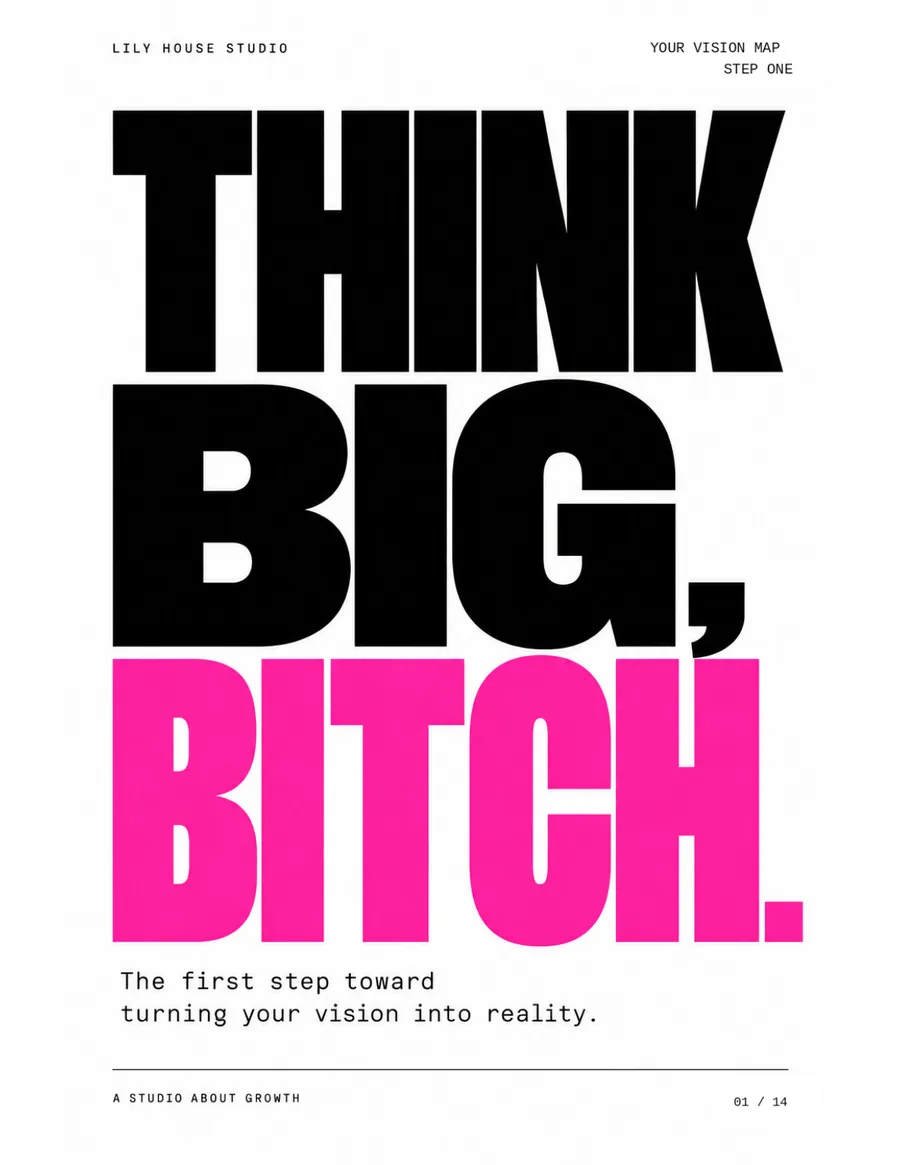 Your Vision Map · Step OneTHINK BIG, BITCH.
A workbook to help you look beyond the project in front of you and start seeing what your idea could become.
Start your Vision MapFree workbook, delivered by email.
Follow the development of The Power of BEliving, PODS and what Lily House is building next.
Across culture, media, technology, creative work and the people making sense of what comes next.
What the signals are telling us about creative work, corporate decisions and the value of the human touch.
See what we see.
New VISIONS work reaches subscribers before it appears on the website.
Every VISIONS story published on the website, newest first.
View the archiveEvery VISIONS article published on the website, newest first. 11 articles.
New VISIONS work reaches subscribers before it appears on the website.
Letters from the House keeps you close to the ideas, people and opportunities taking shape at Lily House Studio: what the studio is building, PODS, The Power of BEliving and new creative opportunities.
Hear when new venture opportunities open for creatives. Applications are currently closed.
Hear about local conversations, creative events and workshops when they're announced.
We'll share new free worksheets and tools as they're released. The existing THINK BIG, BITCH. workbook is available now.
An honest look at what we're building, learning and discovering.
Looking for VISIONS articles? VISIONS has its own newsletter.
The business of possibility.
An independent venture, media and intelligence company.
PATTERNS is Pattern Recognition Intelligence for organizations and decision-makers. It investigates data, history, behavior, culture, markets and emerging structural change to help them recognize what may be shifting before it becomes obvious.
Everything Is Connected.
See how PATTERNS worksVISIONS is Lily House Studio’s independent editorial publication. It covers culture, business, creativity, media, technology and people, connecting what has happened with what is happening now and asking what different choices might make possible. It follows its own editorial judgment.
Look wider.
Read VISIONSPODS is Lily House Studio’s creative venture-development division. It develops original creative ideas and intellectual property into commercially viable ventures, surrounding the work with the resources, collaborators, infrastructure and business support it needs to grow.
Our first Pod is The Power of BEliving, a book and methodology.
Pod applications are not currently open. Future opportunities will be shared through Letters from the House.
Where possibility grows.
See what PODS buildsThen we look again.
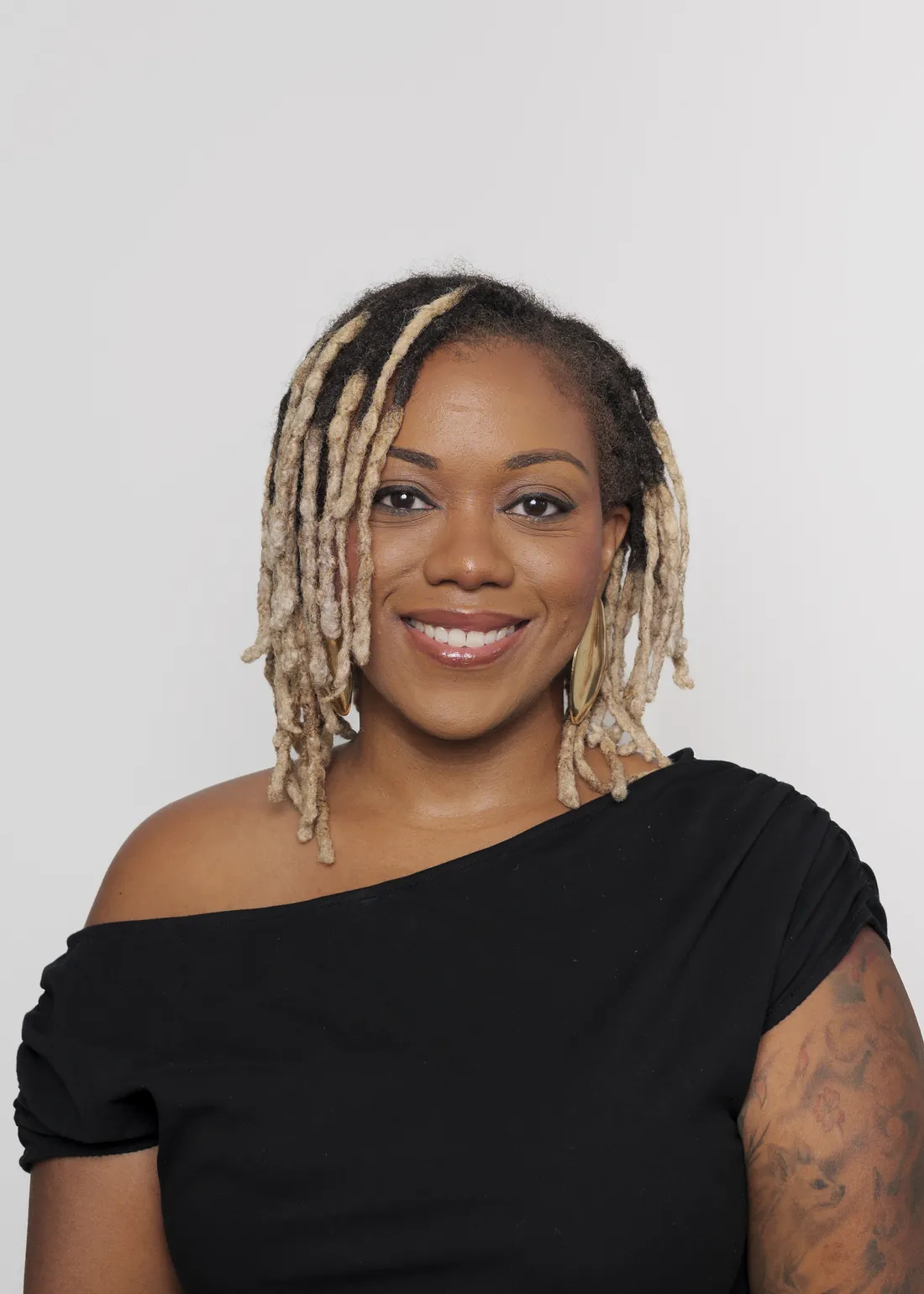
I wanted to create art.
Honestly, I was bored with what I was seeing. Everything around me was starting to look the same. Reboots. Franchises. Familiar formulas. Familiar faces. So much of what we were making seemed to be looking backward, trying to recreate what had already worked.
I wanted to make something different.
Meanwhile, I would go online and see incredible creatives with fresh, brilliant ideas. And I couldn’t stop thinking about how many more people had ideas just as good and might never get seen, simply because of their circumstances.
I grew up with those people.
The talent was there. The drive was there. What wasn’t always there was the money, the connections, the infrastructure or the support, or a way to sustain themselves while they kept creating.
I watched people I loved stop pursuing their gifts.
Years later, I found myself in the same position. I wanted to create art, but I didn’t have the money, the team, the capacity or the infrastructure to make it the way I saw it.
I wanted to build the place I needed.
That was the beginning of Lily House Studio.
I’d rather help build the future we want to see than spend my life reacting to the one we don’t.
Jhaynane BastienFounder & CEO, Lily House Studio
Letters from the House is the Lily House Studio newsletter, where we share what we’re thinking about, what we’re making and what we’re learning across the House.
Before you figure out how, give yourself permission to imagine what.
Have an idea you keep coming back to? A project, business or creative life you want to build? This free workbook is a place to think bigger. Map the vision first. Work out the resources later.
To receive the workbook, sign up for Letters from the House. You'll receive the workbook and House updates in the same signup. You can unsubscribe from Letters anytime. Complete it in your browser and download your PDF, or keep a blank copy for later.
Have a question, a potential collaboration or a commercial opportunity? Tell us what brings you here. We'll point you toward the right part of Lily House Studio.
Working with PATTERNS? Discuss a decision. PATTERNS + PODS partnerships start on Partner With Us.
PODS applications are not currently open. New Pod opportunities are announced in Letters from the House.
There are two ways for organizations to work with Lily House Studio.
The relationship is circular. Intelligence informs what gets created, and what gets created produces new intelligence.
For intelligence-led partnerships in original IP. For PATTERNS on its own, discuss a decision.
What the signals are telling us about creative work, corporate decisions and the value of the human touch.
Let's go back to middle school for a second.
Generate means to produce or bring forth. Create means to make or bring something into existence. The words overlap. The distinction that matters here is agency.
Generative AI works from learned patterns, prompts and instructions. It can generate an image, a song, a video, a campaign or a hundred versions of the same idea.
You decide what the thing is. You decide what it means. You decide what it should feel like. You mold it. You shape it. You bring it to life.
AI has no lived experience. It has never fallen in love, lost somebody or become obsessed with a question.
We already understand the distinction between creativity and execution when the creative is human.
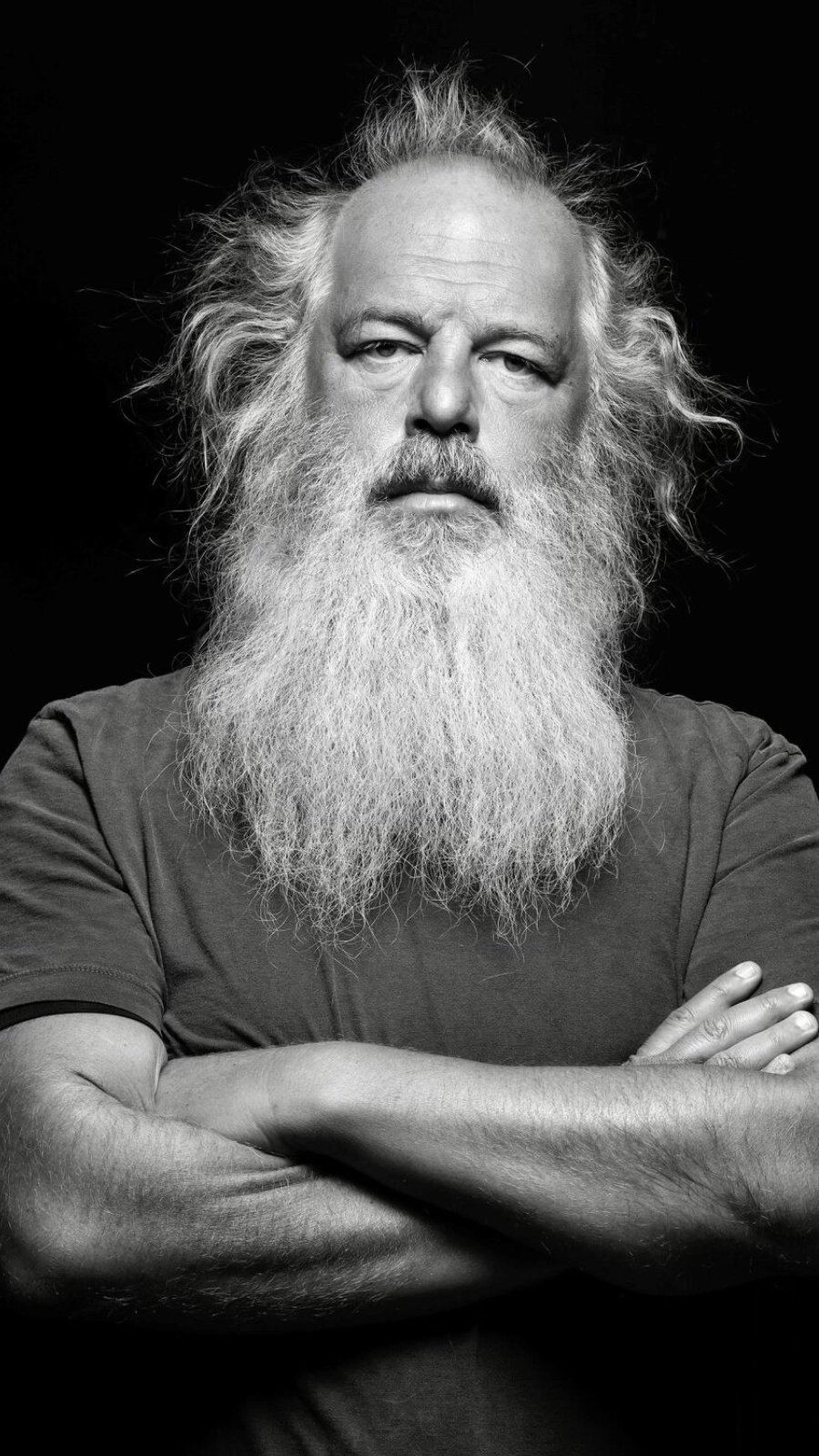
Rick Rubin told 60 Minutes that he barely plays instruments and has no technical ability. When Anderson Cooper asked what artists were paying him for, Rubin pointed to his taste and his ability to express what he feels. [1]
Nobody looks at Rick Rubin and says he is not creative because somebody else plays the guitar.
A director does not operate every camera. A fashion designer does not sew every stitch. An architect does not pour the concrete.
Creativity and execution have never been the same thing.
AI generates. Humans create.
You can't outdo the doer.
So let's talk about the creative job market.
Adobe Labs found U.S. creative-professional job postings rose 8% between September 2025 and April 2026, while the share explicitly requiring AI skills also increased. Adobe described the pattern as a redistribution of creative work rather than a replacement of creative workers. [2]
First-pass variations and parts of production are becoming easier. Selection, direction, client negotiation, originality and accountability are becoming more important.
More options are becoming cheap.
Knowing which option deserves to exist is becoming more valuable.
The holy dollar.
The threat to replace creatives with AI comes down to what companies value: money.
When executives look at AI, they see the closest thing they have ever had to the perfect worker. No exhaustion. No health insurance. No raises. No childcare problems. No one telling an executive the idea sucks.
From a spreadsheet, that looks incredible.
But the argument that slows down the meeting might save the campaign. The art director who says the concept feels cheap might protect the brand. The writer who refuses the obvious line might be the reason anybody remembers it.
AI can do the menial tasks. But who's going to direct it? Who's going to have a vision?
They're trying to make a tool into a consciousness. But that's impossible. At least for now, that's impossible.
Have you actually tried prompting AI to make something specific?
There is a huge difference between typing a vague sentence into a prompt box and translating a precise idea in your head into something that resembles what you imagined.
You prompt. You reject. You reframe. You specify composition, tone, lighting, pacing or style. You iterate. You edit.
On November 9, a day before Adobe MAX opened, Adobe released its latest creator survey. Among more than 2,000 U.S. creators surveyed, 68% of creative AI users said they at least sometimes settle for a result that doesn't quite match what they had in mind. Among creators who had used AI, 47% had given up on it mid-project in the previous three months because getting the result they wanted took too much effort. [3, 4]
Directing the tool is part of the skill.
Whatever companies decide to do, ultimately, they'll have to adjust based on how audiences receive their work.
And right now, audiences are not having it.
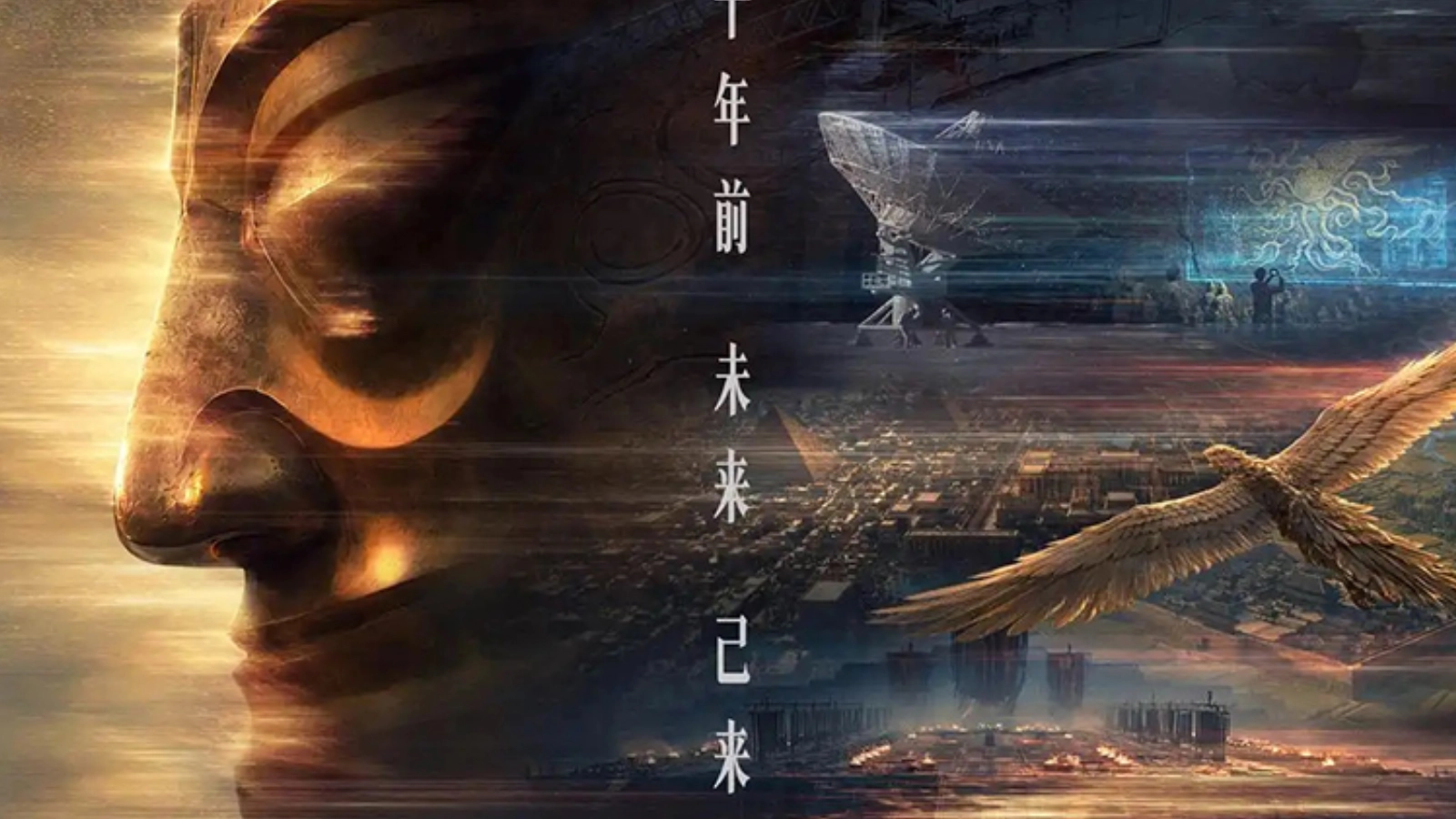
Sanxingdui: Future Past, promoted as China's first fully AI-generated theatrical film, reportedly cost tens of millions of yuan and had earned only 1.7 million yuan at the box office as of November 3. The Guardian reported that AI was used for the film's visuals, some sound effects and scriptwriting, while humans edited the result. Critics described the plot as confusing, the dialogue as awkward and the characters as uncanny. [5]
In the United States, the AI-generated short Thanksgiving Day was removed from participating AMC locations and the TCL Chinese Theatre after public backlash. In December 2025, McDonald's Netherlands pulled an AI-generated holiday commercial after viewers criticized it. [6, 7]
People do not buy tickets because a movie had an efficient production pipeline.
They buy tickets for the story. They buy tickets because they love an actor. There is an emotional connection to the work.
And that's what companies have forgotten. The one thing humans have over AI: emotions and the ability to connect with one another.
I don't see fully AI-generated work having that same emotional impact on audiences.
But companies won't understand the value of that connection until it affects what they value most.
Their pocketbooks.
And some companies are taking notice.
Prada's Holiday 2026 campaign is called Drawing Prada: Animated by Hand. Prada didn't bury the process in the credits. [8]
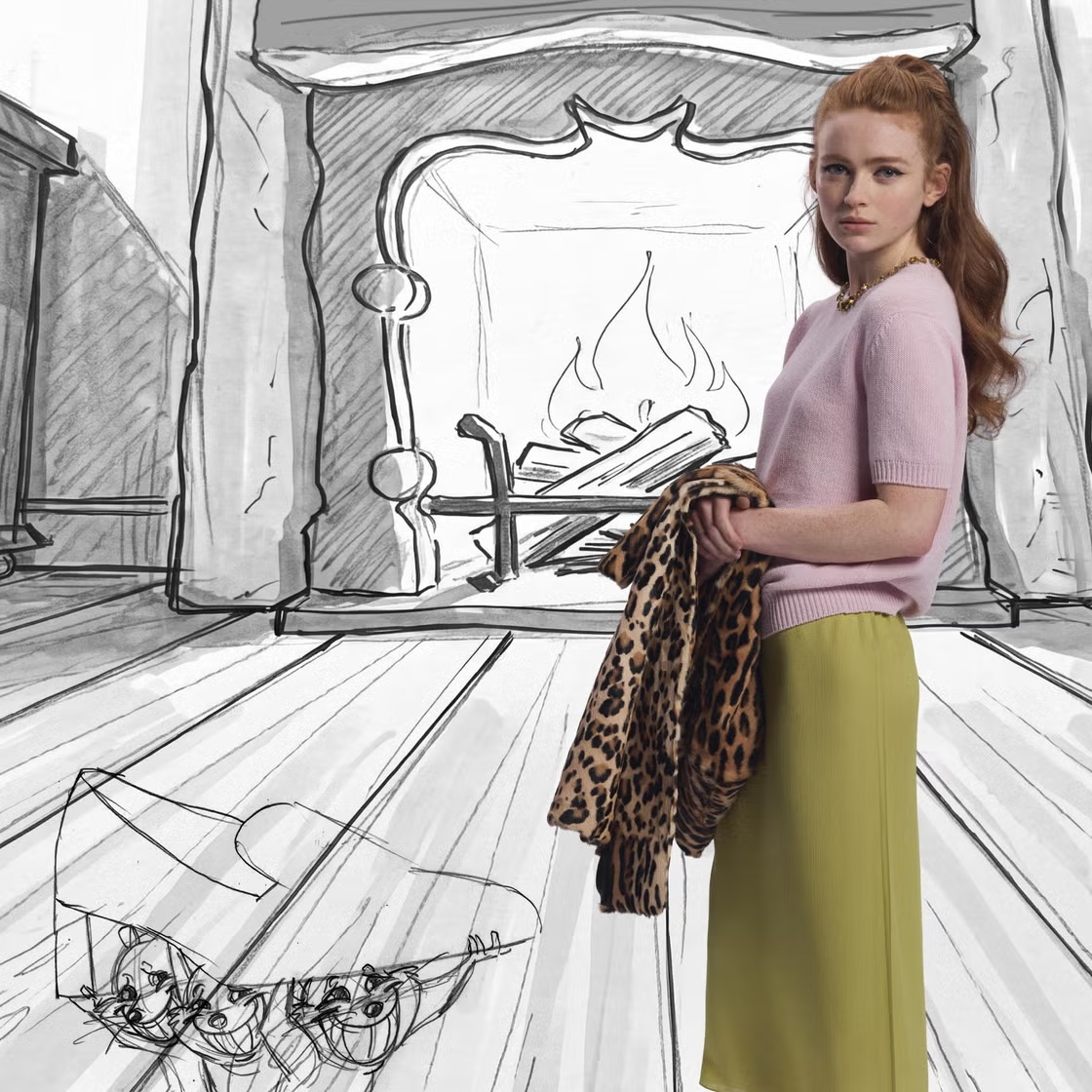
Whether Prada decided to stand behind creatives because of its heritage as a luxury fashion house rooted in craftsmanship or because it's responding to signals from its audience, I see this push to show the humans behind the work as just the beginning of a rebalancing act between companies and creatives.
It speaks to the power of human creativity and the value of human authorship.
When things can be generated in the blink of an eye, efficiency alone loses its value as a differentiator. Artistry, storytelling and emotional resonance become more valuable.
And we, as sentient beings, have that over a computer program.
What people are actually afraid of is the uncertainty. And that is completely understandable given the state of the economy and the job market right now.
Through October, U.S. employers cited AI in more than 121,000 announced job cuts in 2026. Economic and market conditions were cited in even more. [9]
Not knowing whether you're going to have a job is terrifying.
But what we fear will happen and what the signals are showing us are two different things.
What are the signals showing us?
We're also seeing companies hire again.
In a 2026 Robert Half survey, 32% of U.S. hiring managers who had eliminated positions after adopting AI reported reinstating the same or similar roles. Among those making these hires, 40% cited the need for institutional knowledge, 39% cited relationship management that AI couldn't replicate and 38% cited greater-than-expected oversight and quality control. [10]
So what does this all mean?
This is not the first time we've been here.
With every major technological advance, certain jobs have disappeared. Many people have been put out of work. Some technologies have been more devastating than others.
I think what is being tested right now is the human capacity for adaptation rather than just survival.
The more nimble, adaptable and creative you are, the better your chances of succeeding in this new world we live in.
AI is going to become a paintbrush. But giving everyone a paintbrush does not give everyone an eye.
Think about Photoshop. At some point, the existence of the tool stopped being the interesting part. The interesting part became what the person did with it.
AI can become another set of hands.
A filmmaker with very little money can prototype a world that once required a studio. A designer can explore dozens of directions before committing to one. A writer can process research faster. A small team can test ideas at a scale that once required far more resources.
In a Gusto survey of 1,051 people who started businesses in 2025, 60% used AI to help launch their businesses. [11]
Maybe this is the time for you to take that risk on the idea you've been sitting on for years. Maybe it's time to learn new skills, create new jobs and create new positions for yourself.
Or think of the value you hold and the knowledge you hold. Can you create a position within your company based on the skills AI cannot replicate?
Your value is what you notice. What you connect. What you recognize before other people do. What your life has taught you to see that somebody else would miss.
Feel the grief. Feel the fear. However, don't let it suspend you in mental purgatory.
Take the action you feel is best suited to help you not only survive but thrive in this new world.
As for companies, I don't foresee them operating solely on AI in its current state. I believe it would be foolish and a bad business practice to swing so far in that direction.
In the coming years, AI will improve. However, once companies realize they can't get rid of their entire workforce simply to cut the budget, they're going to have to recognize the knowledge, experience and nuance human beings bring to the work.
I foresee many of the companies that made massive layoffs hiring humans again. This time, to work directly with AI, implement AI as a tool, direct it, guide it and translate its output.
The question will change from “How many creatives can we remove?” to “How much more can our creatives do with this tool?”
We are the creators. We hold the taste. We hold the vision. And AI can help us execute that vision.
It's about finding the proper roles and the balance between the menial work AI can free us from and the value human beings bring to the work.
A reminder to companies: human value is indispensable.
Research supported by PATTERNS
PATTERNS, Lily House Studio’s intelligence division, supported source research and verification. The argument and conclusions are VISIONS’.
New VISIONS work reaches subscribers before it appears on the website.
What Cardi B's sophomore album rollout can teach creatives about money, resourcefulness, and getting out of their own way.
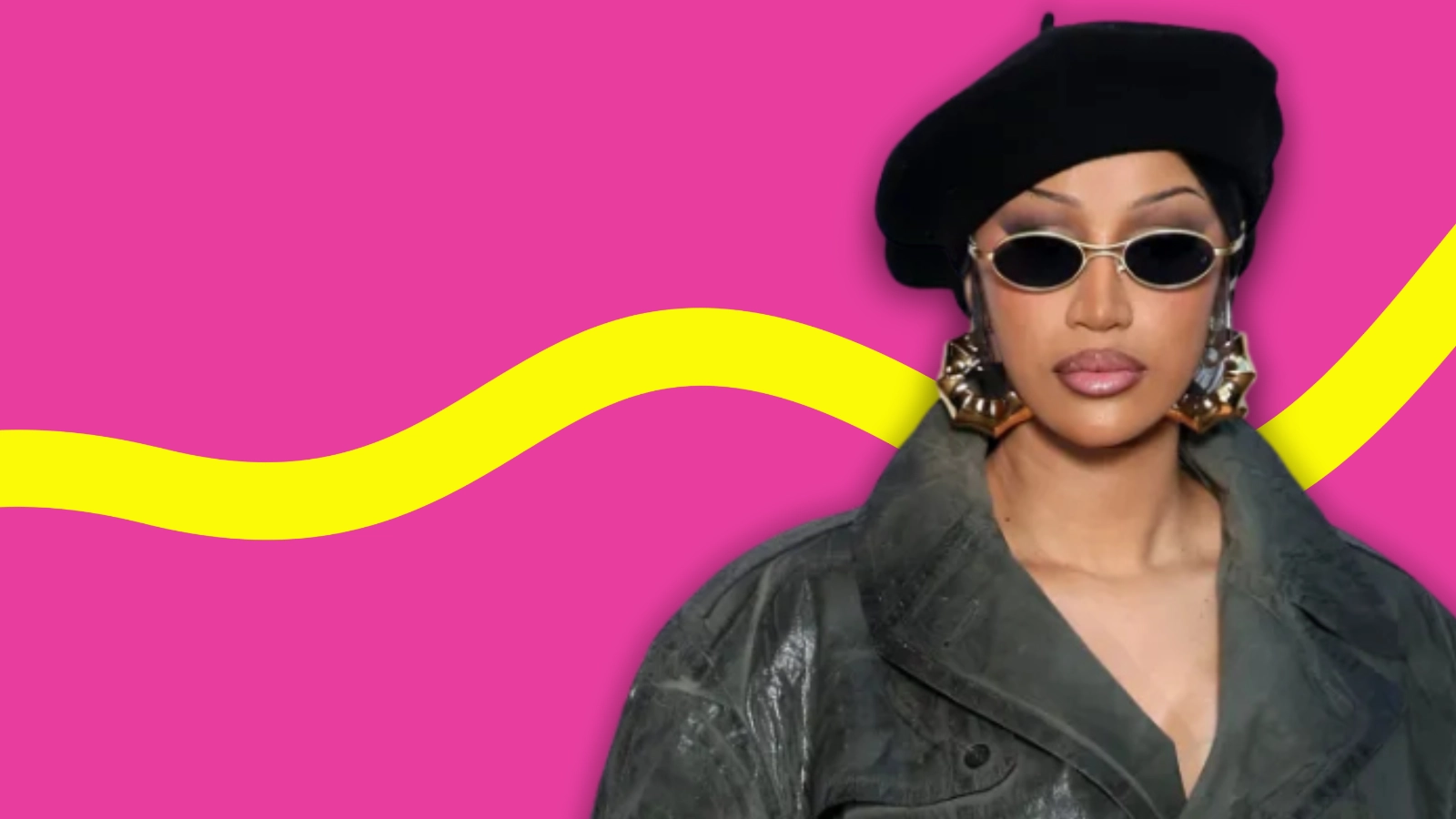
One of the greatest things that stops people is money.
“When I get the money, I'll start.”
“When I hit the lottery, then I'll build that business.”
But what if waiting for permission, not money, is the very thing stopping you from starting the project?
Take Cardi B.
Seven years after releasing her multiplatinum debut album, Invasion of Privacy, Cardi B returned with her long-awaited sophomore album, Am I the Drama?, in September 2025.
Ahead of its release, Cardi joked in a promotional video that Atlantic Records had slashed her marketing budget to $50 after the expenses of her “Imaginary Playerz” music video. So, according to Cardi, she had no choice but to hit the road and sell her albums herself.
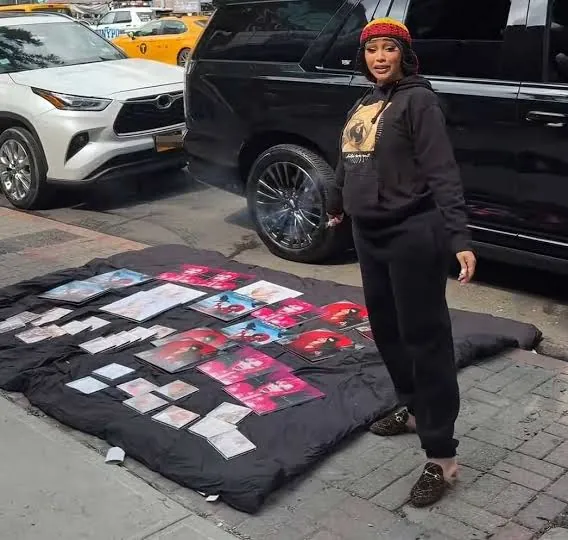
And that's exactly what she did.
She took to the streets of New York, setting up CDs and vinyl records on the sidewalk like a street vendor. She hopped on the subway, approached strangers, and asked them to buy her album. She posted the encounters on social media, turning what could have been ordinary album promotion into genuinely hilarious entertainment.
She even organized meet-and-greets at record stores where fans could purchase her album and meet her in person.
What Cardi understood was that going back to her roots and directly to her audience would do more than sell albums. She went to the people, positioning herself as someone who was still for the people.
And those very same people helped amplify her reach. Fans shared the videos, reacted to the encounters, and posted about the rollout on their own social media. The promotion traveled beyond the people Cardi met on the streets of New York.
VISIONS
She made her audience part of the marketing.
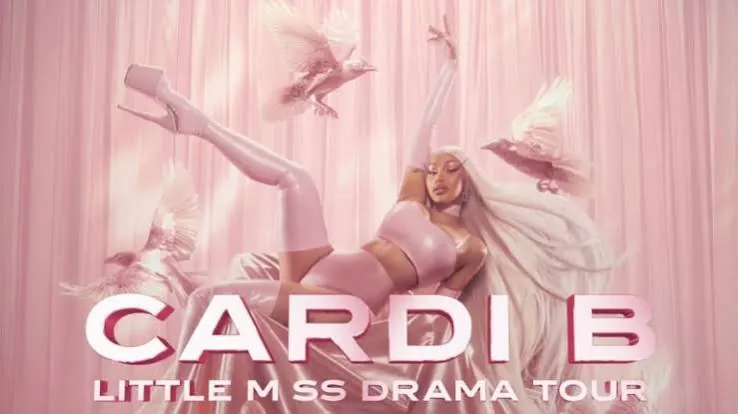
And people paid attention.
Released on September 19, 2025, Am I the Drama? debuted at No. 1 on the Billboard 200, earning 200,000 equivalent album units in its first week, including 88,000 album sales and approximately 145.7 million on-demand streams. Sixteen songs from the album also appeared on the Billboard Hot 100.
By September 2026, the album had spent 52 weeks on the Billboard 200.
Cardi B had another commercially successful album.
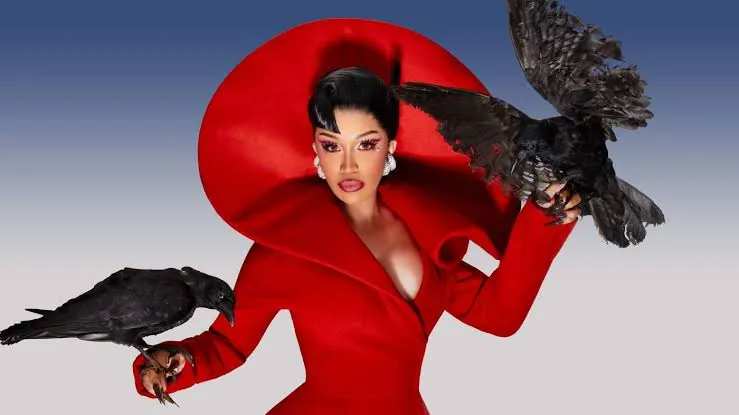
But what makes this worth examining?
She used the resources she had at her disposal.
Her personality wasn't something she had to purchase. Neither was her ability to entertain people. She had spent years building a relationship with her audience, and when it was time to promote her album, she knew exactly how to reach them.
And what I love about Cardi is that she thrives on challenges. She takes people's doubts and uses them as fuel to push herself forward.
Cardi wasn't going to allow fear of failure to be the thing that stopped her from trying. She stepped outside her glamorous persona and stripped herself down to a pair of joggers, pregnant and all.
If she failed, at least she could rest easy knowing she went down fighting.
And I attribute that to her upbringing. You think she could have just rested as a stripper? She had to fight to get to where she is because the other option wasn't an option for her. In a 2017 interview with The FADER, Cardi said she used to strip six nights a week and that she continued working just as hard after leaving the clubs.
And that lit a fire under her ass, a fire many creatives lack.
Regardless of our status in life, we continue to face obstacles. It's what we do when we face them that determines whether we move forward or remain stuck.
Because there are always ways around obstacles, but do you allow yourself to see those options, or do you remain stuck?
You may not have the money. You may not even have a budget, but you have what you have at your disposal to get going.
Maybe you have a phone. Maybe you have a skill, an idea, a small audience, or a group of friends who believe in what you're building.
Sometimes the most successful projects were created on shoestring budgets. Sometimes you have to reach out to your community.
And sometimes your biggest obstacle is yourself.
Overthinking and perfectionism.
VISIONS
Sometimes waiting for the money becomes another way of waiting for permission to start.
How many projects have you put off because you didn't have the money to execute them exactly the way you envisioned?
How many times have you convinced yourself that you need a better camera, a better website, more followers, a larger team, or another certification before you can begin?
How many times have you talked yourself out of starting because the first version wouldn't be good enough?
Meanwhile, the idea is sitting there. The project hasn't moved. And you're still waiting for the circumstances to be perfect.
There's a difference between having the money to build something at the scale you envision and having enough resources to take the first step.
Allow yourself to start imperfectly.
Allow others to watch you try, fail and try again.
Maybe you can't produce the entire film right now, but you can film a scene or create a proof of concept.
Maybe you can't launch the full business, but you can test your idea, speak with potential customers, or begin building an audience.
Maybe you don't have the money to hire a team, but you can reach out to people in your community, find collaborators, and start building relationships.
The first version doesn't have to look like the final version.
And you might discover that once you begin, opportunities and resources become available that you couldn't have anticipated while sitting around waiting.
Cardi B's rollout is a reminder that sometimes creativity itself is the resource.
She understood the assignment.
Now it’s your turn to ask yourself: What do I already have that I might be overlooking?
What can I make, test, share, or build with the resources available to me today?
You may not have the money. You may not even have a budget.
But maybe you already have everything you need for this part of your journey.
Use that.
New VISIONS work reaches subscribers before it appears on the website.
The original Gilded Age made railroad tycoons rich. But the fortunes built beyond the railroads might tell us more about the opportunities emerging today.
Welcome to the neo-Gilded Age.
A few people own a whole lot, and a whole lot of people own very little. Sound familiar?
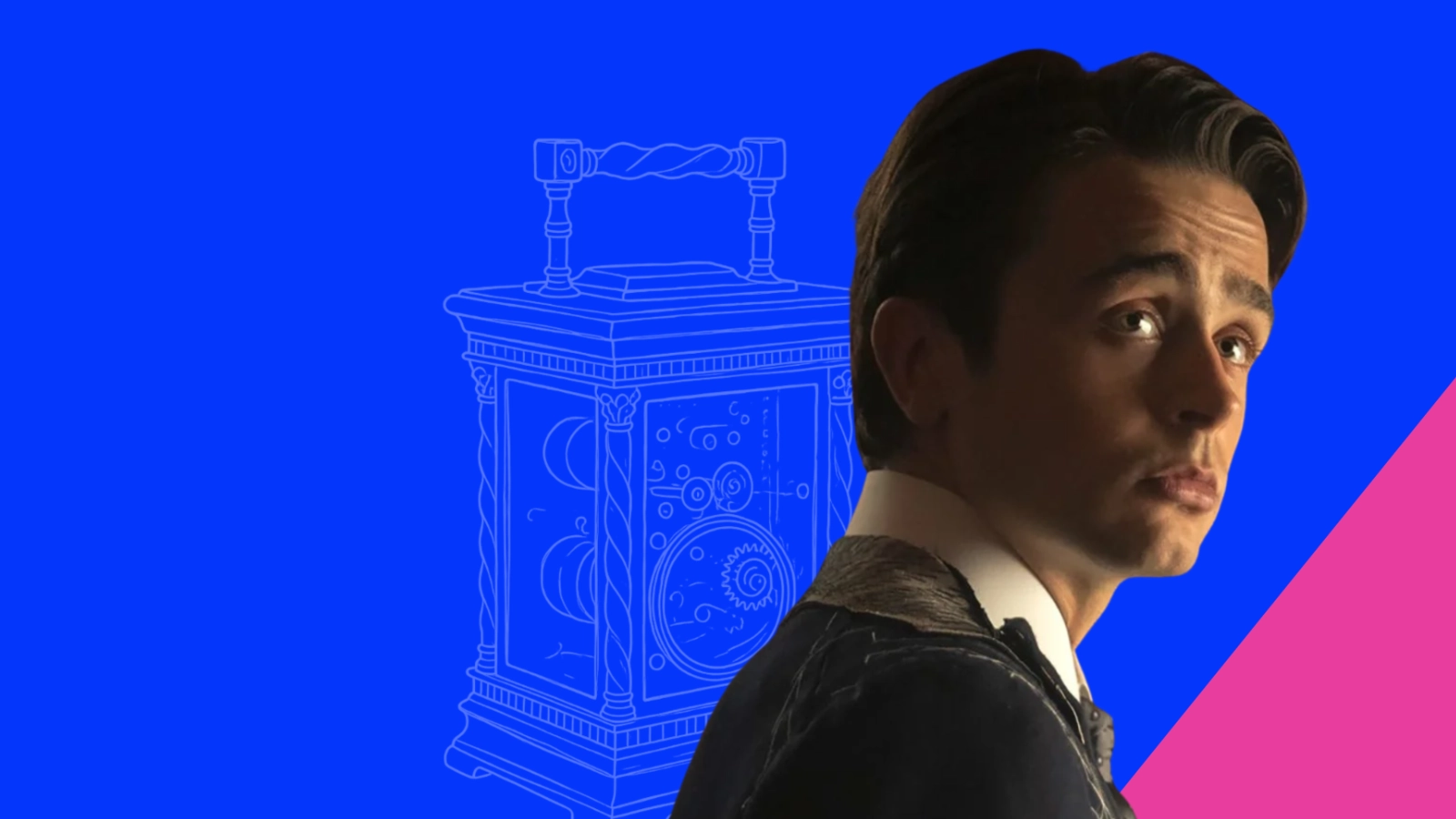
On Sunday, November 1, HBO’s The Gilded Age premiered its fourth season. And while the show follows some of New York’s wealthiest families during one of America’s greatest economic transformations, there’s another character whose story I’ve been thinking about: Jack Trotter.
Jack starts out as a footman in the Van Rhijn household. He isn’t born into wealth. He doesn’t have the educational advantages, money, or connections of the people living upstairs. But he has an idea, and he decides to do something with it. By the end of Season 3, that idea has changed his life.
And when I look at what’s happening in our economy today, I can’t help thinking about Jack. We’re living through another period of enormous economic change. Just like the original Gilded Age, some people are accumulating extraordinary fortunes while others are struggling to survive. But there’s something else happening that deserves our attention.
Beginning in the late eighteenth century, the Industrial Revolution started changing how people produced goods, transported materials, and conducted business. Factories expanded, machines transformed manufacturing, and steam power and railroads eventually made it possible to move people and goods farther and faster.
In the United States, industrialization developed alongside an economy still heavily dependent on agriculture. In the South, much of that agricultural wealth was built through chattel slavery. These systems overlapped. Industrialization didn’t suddenly begin when slavery ended, but emancipation, railroad expansion, and manufacturing growth helped transform the country’s economy.
The first transcontinental railroad was completed in 1869. According to the Library of Congress, approximately 170,000 miles of railroad track were added across the United States between 1871 and 1900.
Think about what that meant. Manufacturers could reach customers in other parts of the country. Farmers could ship their products to distant markets. New towns developed along railroad routes, and businesses could operate on a scale that hadn’t been possible before.
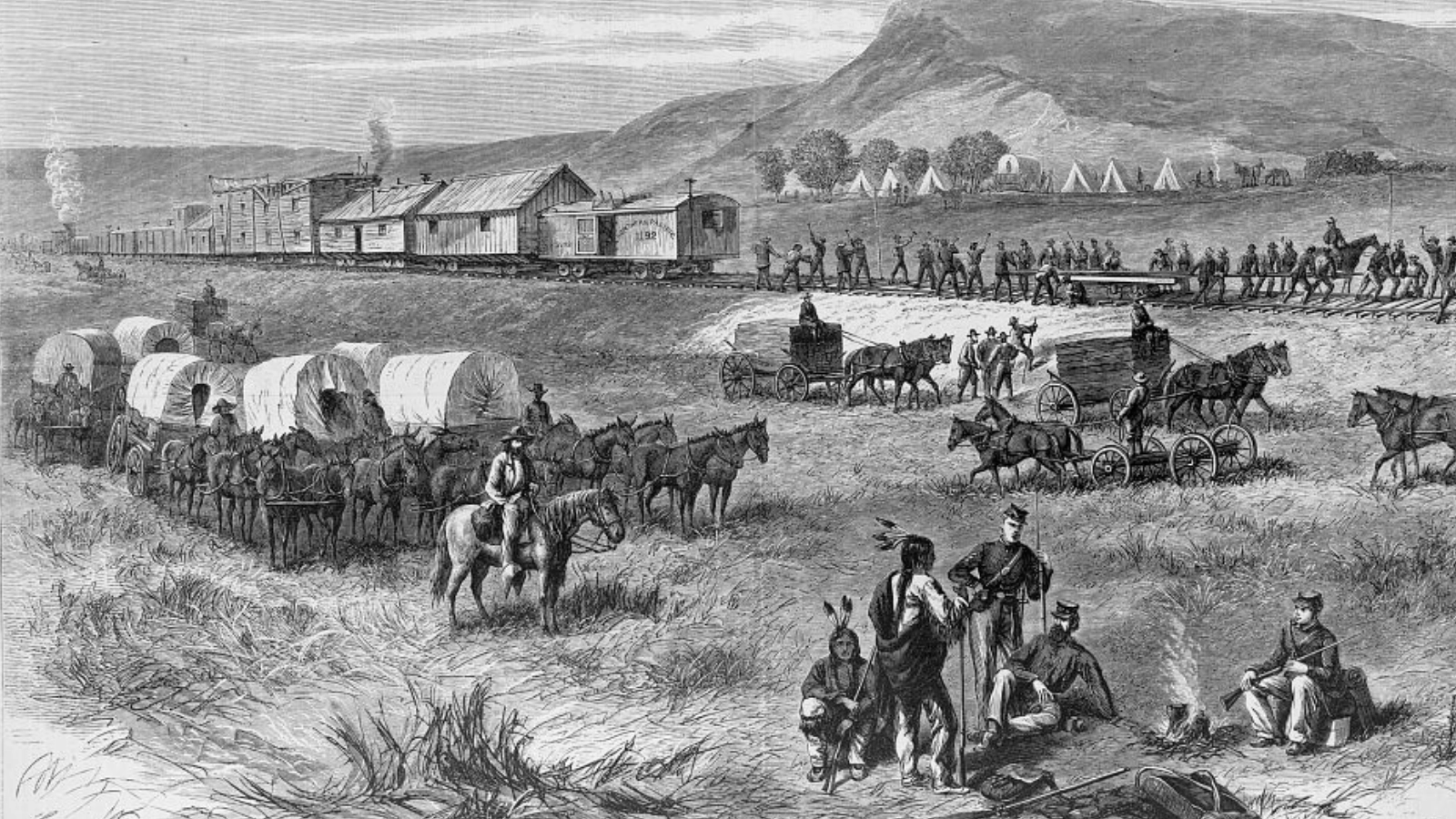
The Vanderbilts built railroad empires. Andrew Carnegie accumulated wealth through steel. John D. Rockefeller built his fortune through oil. These were some of the men who became synonymous with the Gilded Age, when tremendous wealth was concentrated among a relatively small group of industrialists.
But the Gilded Age wasn’t exactly wonderful for everybody. Far from it. Factories employed children, workers endured dangerous conditions and long hours, and wages were often low. Railroad expansion also came at the expense of Indigenous communities whose lands were taken as the country expanded westward. Workers organized, unions grew, and strikes spread as people fought for safer workplaces and better pay.
Investors also poured money into railroad companies because everybody wanted a piece of the action. Companies borrowed heavily to build new routes, sometimes expanding faster than demand could support. In 1873, the failure of Jay Cooke & Company, which had invested heavily in the Northern Pacific Railway, helped trigger a financial panic. Businesses collapsed, investors lost money, and the country entered a prolonged depression.
But here’s the thing about the railroads. Despite the financial crisis, the tracks didn’t disappear. Trains continued moving goods, connecting cities, and opening new markets. The railroad companies were only part of the economic story.
Now look at what’s happening today. The internet, cloud computing, and artificial intelligence have changed how people communicate, work, and conduct business. Technology companies are pouring extraordinary sums into data centers, semiconductors, computing power, and software, particularly to support AI.
And just last Friday, October 30, Wall Street experienced a major technology selloff as investors questioned whether companies would generate sufficient returns from that spending. Reuters reported that the Nasdaq Composite fell 2.86%, while the semiconductor index dropped 7.2%. Earlier in the week, Reuters also reported that China’s STAR50 index, which includes major AI and semiconductor companies, had fallen approximately 40% in less than four months, wiping out around $480 billion in market value.
Does any of that sound familiar? During the original Gilded Age, investors understood that railroads were transforming the economy. They were right about the technology. But that didn’t mean every railroad investment would make them wealthy.
And AI is raising serious questions about jobs, compensation, and what happens when technology changes the amount of human labor companies need. The Industrial Revolution showed us that economic transformation can create enormous wealth and tremendous hardship at the same time. We have to pay attention to both.
But I keep coming back to another question. What happened to the people who weren’t investing in railroad stocks? What about the businesses that became possible because the railroads existed?
Take Fred Harvey. In 1876, Harvey began operating a restaurant at a Santa Fe railroad depot in Topeka, Kansas. He had worked in the railroad industry and knew the food available to travelers was often terrible. People needed somewhere decent to eat, and he built a business around that need.
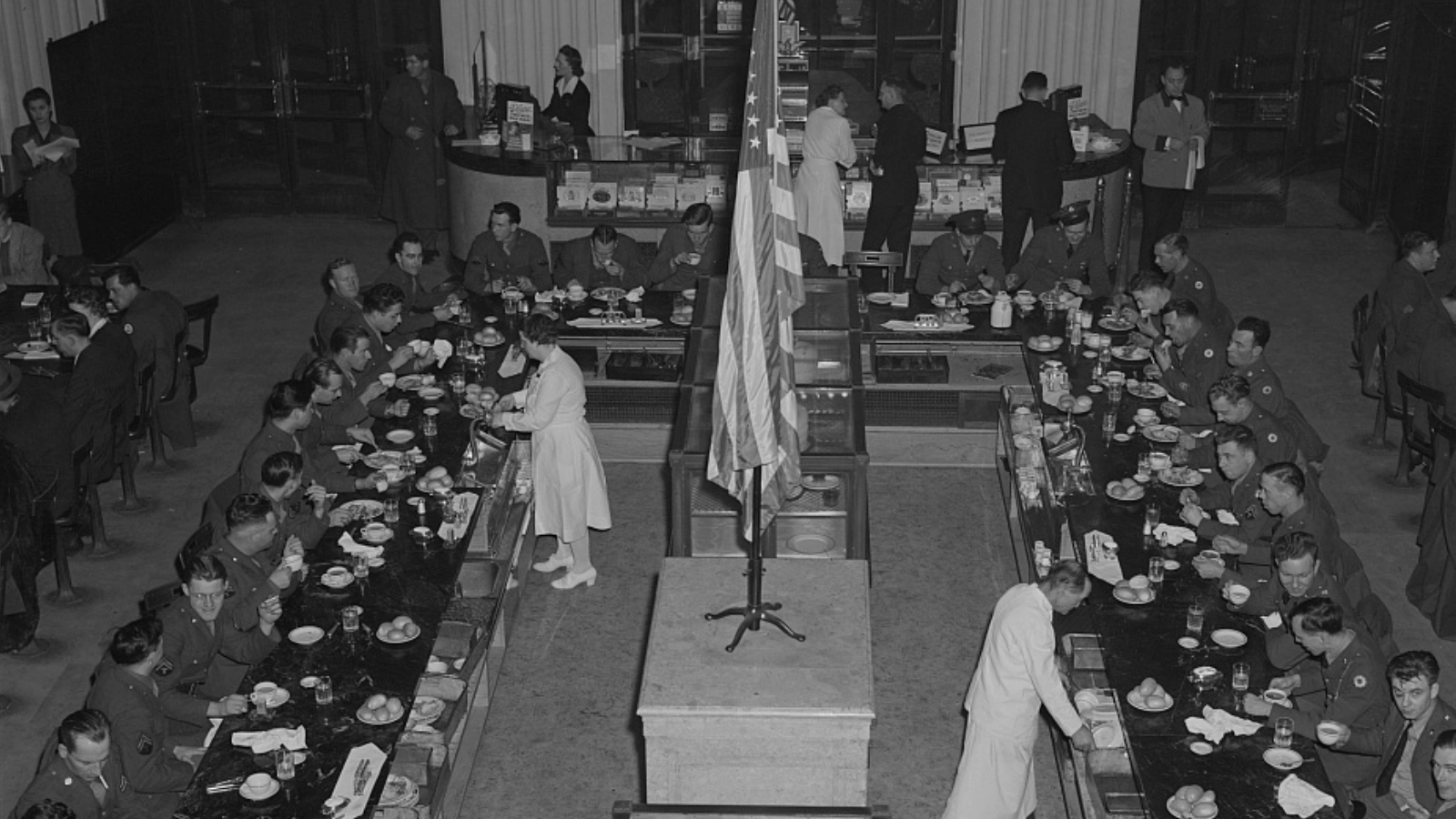
According to the Kansas Historical Society, within seven years Harvey operated seventeen restaurants along the railroad’s main line. By 1901, his company had grown to forty-five restaurants and twenty dining cars across twelve states. Harvey didn’t own the railroad. He built a company serving the people traveling on it.
Now look at Montgomery Ward. In 1872, Aaron Montgomery Ward started selling products by mail-order catalog. As railroad networks expanded, businesses like Montgomery Ward and, later, Sears could reach customers living far from major cities. The Smithsonian explains how rail transportation helped make that kind of national commerce possible.
They weren’t building railroad tracks. They recognized what an existing transportation network could make possible. And that brings me back to Jack Trotter.
Jack is a footman who loves figuring out how clocks work. He comes up with an idea for improving an alarm clock, then works to develop it. But having an idea and turning it into something valuable are two different things.
He needs money to develop his invention and pursue a patent, so he turns to the people around him. Some of the servants he works alongside contribute funds. With help from Bannister, the household’s butler, he gains access to people who can help him with the patent process. And eventually he partners with Larry Russell, whose family connections and business experience open another door.
In Season 3, Jack and Larry sell the clock patent for $600,000 and split the proceeds. Jack receives $300,000. A footman becomes a wealthy man.
What interests me isn’t only the money. Jack started with an idea, took action, got support from his community, and kept going until he had created something valuable. He didn’t begin with every resource he needed. But he did something with what he had, and people helped him along the way.
That’s something more creatives need to hear. You don’t need every connection, every dollar, or a perfect plan before you begin. The next step can lead you to people and opportunities you couldn’t reach from where you started.
During earlier economic eras, owning land, factories, equipment, transportation infrastructure, and natural resources gave people control over the assets used to produce economic value. But today, you can start with that thing you’re holding, the one you’re reading this article on. Your phone or your computer.
You can build a website, publish a book, sell a product, reach customers across the world, or start a business around an idea. Many of the tools available are free or relatively inexpensive. The internet changed access to information and distribution. Social media changed how people could reach audiences. Digital commerce made it easier to sell without a physical storefront, and AI is expanding what individuals and smaller businesses can do with fewer resources.
But you don’t even have to use AI. That’s the point. We’ve been watching people use these technologies to build businesses for years.
Michelle Phan began making makeup videos on YouTube before co-founding Ipsy, a beauty subscription company that reached a valuation exceeding $500 million in 2015, according to Forbes. Issa Rae created The Mis-Adventures of Awkward Black Girl and distributed it independently on YouTube. That helped open the door to Insecure on HBO, but she didn’t stop at a television show. She went on to build HOORAE, a media company spanning film, television, music, and other creative ventures.
Their original work helped them reach audiences, but the opportunities didn’t stop at content. And the same tools are opening routes into retail, education, software, design, publishing, and services. The creator economy is one visible part of a much broader change in commerce.
Go beyond attention. For years, everybody has been focused on views, likes, followers, and engagement. How many people watched your video? How many subscribers do you have? Did your post go viral? Okay. But what are you actually building?
You can spend years building an audience on social media, and at any moment your access to that audience could disappear. Your account could be suspended, the algorithm could change, or the platform could stop showing your work to the people who followed you. The company controls the algorithm. The company controls distribution. And when you depend entirely on that platform, you depend on somebody else’s business to keep yours running.
Build the company. Build that email list. Create the product. Develop your intellectual property. Give customers and subscribers a direct way to find you beyond social media. Followers aren’t the same thing as a business, and going viral isn’t the same thing as building wealth.
The name of the game is ownership. Content creation can be the stepping stone, but what comes after it? What can you build that has value beyond the platform where you started?
Jack developed an invention someone was willing to pay for. Michelle Phan and Issa Rae used creative work to reach audiences and then built businesses beyond those platforms. The opportunity extends to writers, designers, artists, educators, and people with business ideas they haven’t acted on yet. What matters is recognizing what the tools make possible and deciding to build something of your own.
VISIONS / WHAT WE SEE
The name of the game is ownership.
When I look back at the Industrial Revolution and the Gilded Age, I see tremendous economic suffering. People lost jobs and savings, workers fought for protections, and a small group of industrialists accumulated extraordinary fortunes. But I also see new industries, businesses, and opportunities for upward mobility that hadn’t existed in the same form before. Some people built wealth. Many others remained excluded.
And I believe we’re at the beginning of an even greater opening. Unlike the original Gilded Age, when opportunities for upward mobility were available to a much smaller share of the population, the internet has made it possible for far more people to enter markets, reach customers, and try to build businesses of their own.
We’ve already seen the beginnings of that change. People are developing intellectual property, creating products, and growing companies through technologies they don’t own or control. I believe more people could become owners of the value they create, and that this could lead to one of the greatest expansions in the distribution of newly created wealth in history.
That distinction matters. Creating income and building wealth aren’t necessarily the same thing. If you create something valuable, you should be thinking about how much of it you own and what you can carry with you if a platform changes.
Fred Harvey saw hungry railroad passengers. Montgomery Ward saw customers he could reach beyond the storefront. Jack Trotter saw what he could do with a clock. Each recognized something becoming possible and acted on it.
And now I’m looking at the people who have ideas but think they don’t have the money, connections, or institutional backing to pursue them. The next great business opportunity might not come from owning the technology everybody is talking about. It might come from seeing what that technology makes possible and building something people need.
Everybody’s betting on AI. I’m betting on people and what they can build.
New VISIONS work reaches subscribers before it appears on the website.
The next generation of founders is already creating. What happens when artists, filmmakers, and designers begin seeing their projects as the foundation for something bigger?
On October 3, my birthday, I attended an Artists as Entrepreneurs panel at Fuser in Los Angeles. I went because I'm not the only one who has noticed that creatives are the next founders. I wanted to hear from people who had already taken that leap.
The panel included Charles Broskoski, co-founder of Are.na, and Dalena Tran, an artist and filmmaker who co-founded Fuser with Hirad Sab. The conversation was less about whether these artists considered themselves entrepreneurs and more about the companies they had already built. Their creative experiences had led them to businesses beyond the projects they originally made.
I'm glad creatives are finally waking up to what they can build and lead. Soon enough, investors and other industries who tend to be three steps behind will catch up and notice as well.
And the opportunity goes far beyond the creative industries. Technology is changing what people can build, and creative vision is becoming more important to what gets built.
Creative industries often teach you to see yourself as the person hired to produce a project, not the person capable of leading a company.
Consider what your work already requires. If you're an independent filmmaker, you may develop budgets, hire collaborators, negotiate agreements, manage schedules, and coordinate production. Independent designers manage clients, rates, expenses, and contracts. Photographers handle equipment, crews, licensing, and client relationships.
These are business operations, even if you've never called yourself an entrepreneur.
For many independent creatives, freelancing is entrepreneurship by another name.
The structure of creative industries reinforces a different identity. The artist is called talent. The filmmaker is hired for a production. The designer is commissioned to deliver a campaign. Finish the project, get paid, move on, and find the next opportunity.
That structure teaches you to think about the next job or project rather than what could grow from the work you've already created.
You might know how to budget a film but not how to build a production company that can sustain future films. You may already be managing an independent practice without knowing how to grow it beyond your own labor.
There is a difference between knowing how to run a project and understanding the business behind it. Cash flow, financing, intellectual property, contracts, company structure, marketing, ownership, and continuing revenue require knowledge beyond the skills needed to complete the work.
And the expertise required changes as an idea grows.
Knowing how to make an existing business more efficient is different from imagining what it could become. Creative thinking asks what is possible, what is missing, and what could exist. Financial, technical, and operational thinking helps determine what it will take to make that possibility work.
They are not opposing forces. They balance each other.
Disney's animation Renaissance illustrates what can happen when these skills work together. The Little Mermaid helped launch that era in 1989, bringing together animators, filmmakers, the Broadway storytelling of Howard Ashman and Alan Menken, and executives who understood financing and production. They were adapting a familiar fairy tale, but the achievement was in imagining a new way to bring it to life.
Decades later, Disney demonstrated how those responsibilities could be separated. Its 2020 restructuring centralized distribution and financial accountability outside its content-producing divisions. In 2023, the company returned more of that responsibility to creative business leaders.
Those decisions reveal how the power to develop an idea and the power to determine its commercial future can sit in different places.
If Hollywood is an industry built on the arts, why isn't creative vision the force leading it?
The challenge is not choosing creativity over financial logic. It's understanding that a business needs both, without allowing yesterday's commercial successes to define the limits of tomorrow's possibilities.
The creative has always been the Renaissance man, the one who wears many hats. Creativity means more than being able to tell a story or make visual art. It is also the ability to connect different disciplines, see beyond established ways of doing things, and recognize possibilities other people may overlook.
Leonardo da Vinci was a painter, but he was also an anatomist, architect, engineer, and student of the natural world. His drawings connected artistic observation with scientific and mechanical investigation. He did not approach art and invention as unrelated forms of thinking.
Centuries later, Steve Jobs spoke about bringing technology together with the liberal arts and humanities. In his 2005 Stanford commencement address, he explained how studying calligraphy later influenced typography on the Macintosh.
But the story of Apple also requires Steve Wozniak.
Wozniak designed the Apple I and Apple II computers. He was an inventor with his own technical imagination, not simply someone carrying out Jobs's instructions. Jobs recognized the possibility of bringing personal computing to a wider market and helped turn their work into a business. Wozniak's engineering, Jobs's product and commercial judgment, and the contributions of other people were all essential.
The person who recognizes an opportunity does not always possess every skill required to execute it. And the person who understands how to make something work may also see possibilities the founder hasn't considered. Each contributes to what the business can become.
VISIONS / Perspective
“Technology alone is not enough.”
Historically, a creative with an idea for a software product needed access to specialized technical talent and significant resources before beginning to bring that idea to life. Those requirements haven't disappeared, but AI-assisted development and vibe coding are making it easier to create prototypes, build tools, and test possibilities.
Deloitte's 2026 software industry outlook describes software creation becoming faster and cheaper, with new AI-native companies increasing competition. In Stack Overflow's 2026 Developer Survey, about 66% of respondents to its workplace AI tools question reported using AI coding assistants or agents.
Turning a prototype into a dependable company still requires engineering, security, customer relationships, and operations. More accessible tools also create room for people who never considered starting a technology company.
A filmmaker might encounter a problem in production that could be solved with software. A designer might recognize a need that existing platforms overlook. An artist might imagine a different way for people to learn or collaborate.
As more people gain access to the tools of production, the ability to make something is only part of what makes it valuable.
When more people can build, what becomes valuable?
The ability to understand people, identify what is missing, connect ideas across disciplines, and recognize what is worth creating becomes more consequential. The next generation of founders could emerge from creative backgrounds and build companies in technology, media, education, or industries that have yet to take shape.
But seeing the opportunity is only the beginning.
What if that project could become the thing that sustains you and grows into something bigger?
A film could become the foundation for a production company. An artist's research could develop into a publication. A creative practice could become a studio. The process of making something could reveal a problem worth solving through an entirely different product.
Issa Rae began with the independently created web series The Misadventures of Awkward Black Girl. Her work eventually expanded into Insecure and HOORAE, a company developing and producing work across media. The original project was one expression of a perspective that could support a larger enterprise.
A project is something you bring into the world. A business is the structure that allows you to keep creating, earning, and developing what comes next.
The important shift is learning to see beyond the first expression of an idea.
If you're exploring a business opportunity, you need to understand what you want to create, why it matters, and who it is for. As your idea develops, different questions emerge. How will you finance it? What will you own? Where will revenue come from after the first project? Who needs to be involved? What will allow you to create the next project without starting from nothing?
The skills you need to imagine an idea aren't necessarily the ones you'll need to finance, produce, operate, or grow it. Your identity has to expand, and so does your understanding of what each stage requires.
Even if you intend to move between individual projects, understanding contracts, compensation, licensing, and intellectual property helps you make informed decisions before signing agreements that determine what happens to your work.
Putting on a business hat does not mean taking off the creative mind. Business knowledge gives you more say in what you build, what you keep, and where your work might lead.
It also helps you recognize when you need somebody else's expertise.
A filmmaker does not personally operate every camera, compose every score, or edit every scene. A creative founder developing a technology company does not necessarily need to write every line of code. The leader has to understand the vision, communicate it, bring the right people together, evaluate the work, and make decisions as the idea takes shape.
That is the ability to orchestrate.
Orchestration means recognizing the different skills required and coordinating the people and resources capable of bringing a vision into reality. Knowing how to lead also means recognizing what you do not know and learning enough about the business to make sound decisions.
You already spend much of your creative life connecting ideas, working across disciplines, and making things from what you have available. There is no reason to limit those abilities to fulfilling somebody else's vision.
The next wave of successful entrepreneurs will come from creatives who are currently thinking about how to get one film made, one book published, one collection released, or one creative idea funded.
Creatives have to begin thinking bigger and seeing more of themselves.
Not only what you can make today, but what your work could become, and what you need to learn to lead it.
Primary sources and additional context for this editorial. The thesis and interpretations are the author’s.
New VISIONS work reaches subscribers before it appears on the website.
As social platforms become places to develop and distribute entertainment, creatives are finding new ways to build audiences, demonstrate their value, and bring their visions to life.
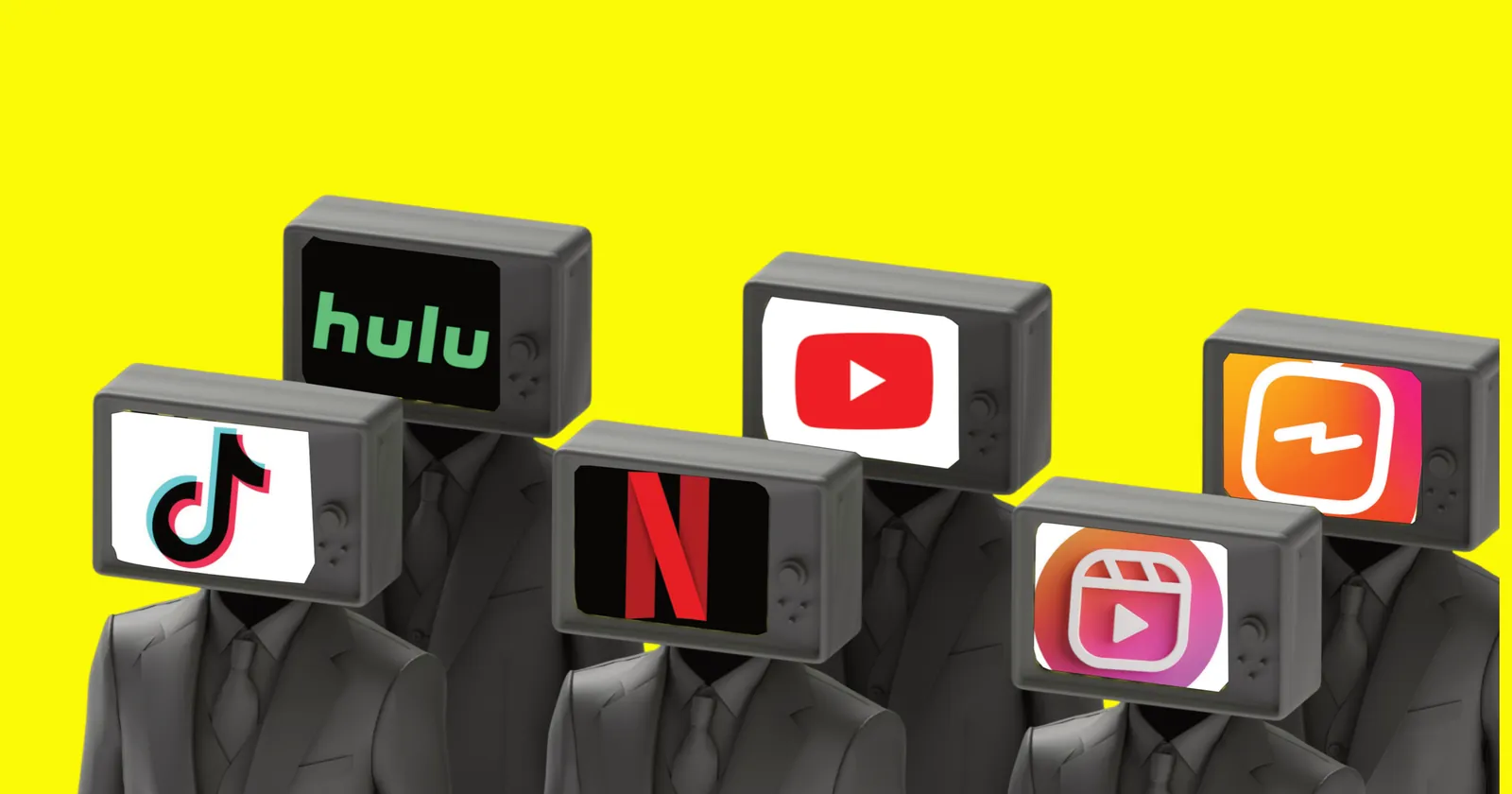
There really is nothing new under the sun.
Streaming is starting to look a little more like cable. Social media is starting to look a little more like streaming. Television is moving onto phones, phones are sending people back to television screens, creators are building shows, and platforms we once treated as completely different categories are beginning to behave like parts of the same entertainment system.
The technology keeps changing.
Human behavior is much more stubborn.
We still want to discover something worth watching. We still want recognizable people, characters, formats, and stories. We still want a reason to come back. We still want to talk about what we watched with somebody else.
What is changing is the infrastructure around those impulses.
For years, we talked about social media primarily as a distribution surface. You made a post. The post traveled. Then you made another one.
That description becomes less useful when audiences are opening the same platforms to watch recurring shows, episodic stories, interviews, documentaries, commentary, live programming, sports clips, serialized personalities, and long-form creator-led work.
At some point, the organizing question changes.
It is no longer only:
What should we post?
It becomes:
What should we program?
THE SHIFT
“What should we program?”
Television gave us the schedule.
Streaming gave us the library.
Recommendation-led social feeds introduce something else: a stream of programming that adapts as the audience moves through it.
You do not always open TikTok, Instagram, or YouTube with a specific title in mind. Sometimes you open the platform and the programming finds you.
That sounds technologically new, but the behavior underneath it is familiar.
Think about channel surfing.
You sat down with a remote and started moving through whatever was available. Comedy. News. Sports. A music video. A cooking show. A commercial. Something bizarre you had no intention of watching, but somehow it made you stop.
You did not always know what you wanted before you found it.
You discovered it by moving through programming.
We are doing that again.
Except now the channel is personalized.
The algorithm has the remote.
Every watch sends a signal. So does every skip. A rewatch, a share, a save, a comment, a follow, or the decision to return tomorrow all tell the system something about what held your attention.
That means discovery is no longer simply the doorway into programming.
Discovery is becoming part of the programming itself.
MEDIA / DISCOVERY
THE ALGORITHM
HAS THE REMOTE.
Traditional television kept more distance between the audience and the system making decisions about what reached them.
People watched. Ratings and research attempted to measure that behavior. Networks, studios, advertisers, and programmers interpreted the data and made another set of decisions.
Social collapses some of that distance.
A viewer can watch a program and immediately respond to it. They can follow the person behind it. Comment while a story is unfolding. Ask for another episode. Share it. Save it. Rewatch it. Tell you exactly which character they hate. Then move with a creator from a sixty-second piece into a twenty-minute episode, a livestream, a newsletter, a podcast, or a television screen.
For the content creator, all of that activity produces another layer of audience intelligence.
Which is why I keep coming back to this line:
The audience has pretty much become a Nielsen report.
A content creator now receives information about their own audience with a speed and intimacy traditional programmers did not always have.
Behavioral data can tell you what happened.
Sometimes the comments will tell you why.
Why did people replay that moment? Why are they asking for another episode? Why did one format create return behavior when another one did not? Why are viewers arguing about a character? Why are they sending the story to a friend?
The audience is not simply being measured after the fact.
It is participating while the programming environment is operating.
THE FEEDBACK LOOP
“The audience has pretty much become a Nielsen report.”
This is where the old categories start getting slippery.
YouTube may begin on a phone and end on a television. A vertical story may be serialized like a soap opera. A creator may use the same channel for a documentary, a short recurring format, a livestream, and a long-form show. Instagram has expanded television viewing features. Social platforms are increasingly interested in episodic and longer-form creator programming. Meanwhile, television screens are becoming major viewing surfaces for creator-led work.
So what exactly are we looking at?
The term social TV has existed for years, historically describing the overlap between television viewing and social interaction. More recently, the phrase has also been used for creator-led episodic shows built specifically for social platforms.
That makes sense for part of what is happening.
But I think the larger shift is broader than television being reformatted for a vertical screen.
At Lily House Studio, we use social streaming to describe the bigger model:
THE LANGUAGE OF WHAT’S NEXT 04 / A NEW MODEL
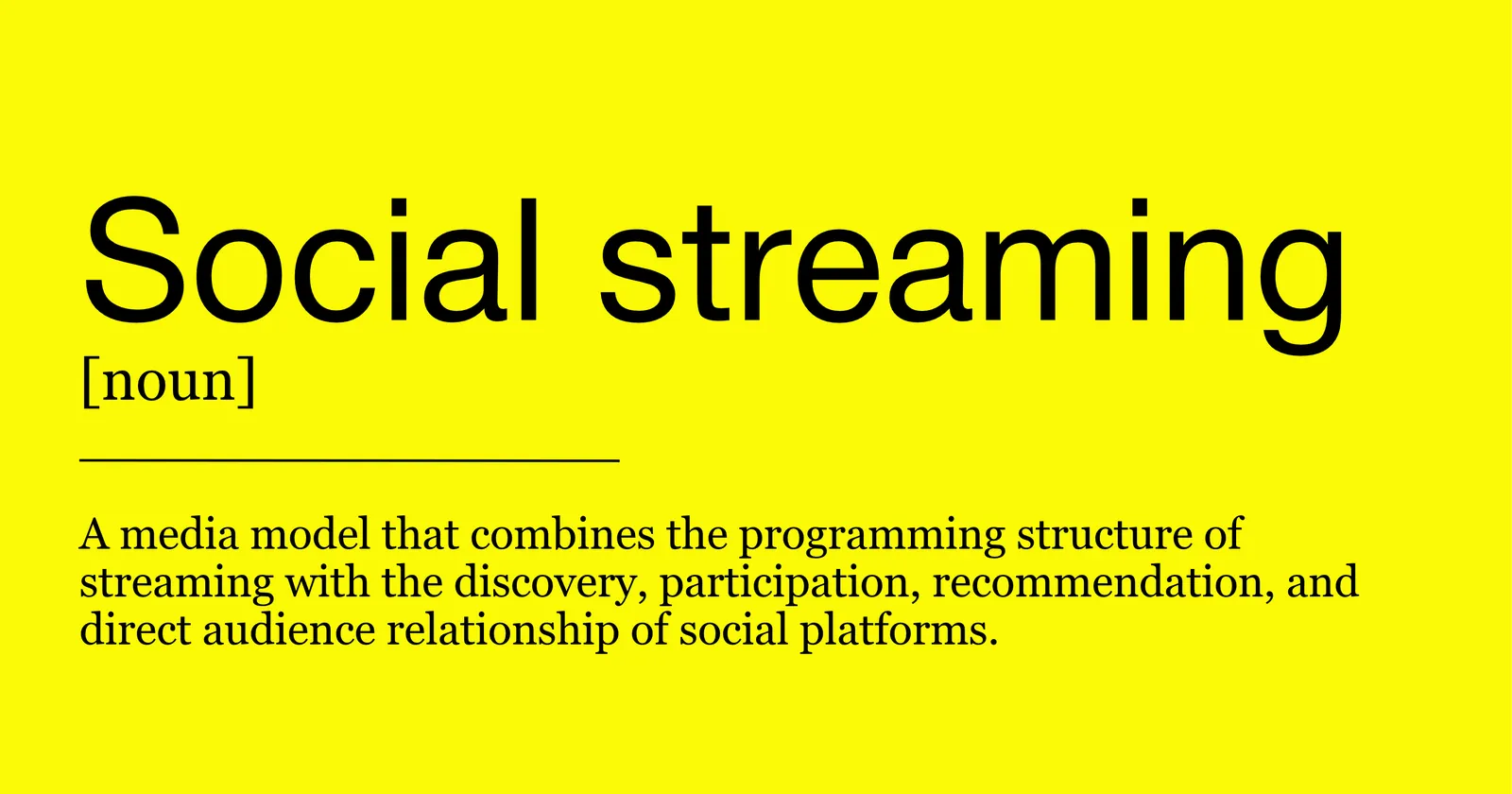
Streaming contributes depth, repeat viewing, programming, and libraries of work.
Social contributes discovery, participation, community, recommendation, and a direct relationship between publisher and audience.
Put them together and the lines between social media, streaming, television, and other entertainment formats become much harder to defend.
The screen does not define it.
The duration does not define it.
The more useful question becomes:
What kind of programming relationship is being built between the audience and the media company?
For creatives, one of the biggest changes may be where a story gets its start.
Traditionally, if you wanted to create a television series, you needed someone to give you the opportunity to make it. A network, a studio, a production company or a financier had to believe in the idea before an audience could experience it.
That system hasn't disappeared. And neither has the need for financing, production infrastructure or distribution partners.
But it is no longer the only possible starting point.
A filmmaker with an idea for a documentary series may be able to develop a pilot, release portions of it on social platforms and begin learning whether people want to watch more.
A writer might develop a recurring format that eventually becomes something larger. An artist might build a world that an audience becomes invested in over time.
And the audience doesn't necessarily have to leave the platform to demonstrate that interest.
They may watch every installment. They may ask when the next episode is coming. They may share it with friends, return for the next part, or begin following the people and stories involved.
Those behaviors tell us something.
They don't automatically prove that an entire season deserves financing. But they can give creatives evidence of interest before committing the resources required to produce one.
That changes the development process.
Rather than producing an entire season and hoping people find it, a creative may have an opportunity to introduce the idea, observe how audiences respond, and use that information to help determine what comes next.
There is something important to distinguish here, though.
Audience participation is not the same thing as creative direction.
People can tell you what they liked, what they didn't understand, what they connected with and what they want to see more of.
That doesn't mean they should decide what the story becomes.
There is a difference between listening to an audience and making every creative decision based on what performs best.
And there is another distinction worth making.
THE TENSION
HAVING ACCESS TO DISTRIBUTION DOES NOT MEAN HAVING THE RESOURCES TO PRODUCE.
Having access to distribution does not mean having the resources to produce.
A filmmaker still needs a crew. A writer still needs time to write. A production still has costs. Creating a series requires more than having a camera, an internet connection and an idea.
But that doesn't mean you need an entire production team or the budget for a full season just to take the first step.
You might start with a scene. An interview. A short pilot. A recurring format. Something that gives people a glimpse of the larger vision.
And if you do have the resources to produce independently, social media has opened another door into the entertainment industry.
You can make something and put it directly in front of an audience without first waiting for a traditional studio or network to give you permission.
Maybe your ultimate ambition is still Hollywood. Maybe you want to make a series for Netflix or work with a major production company.
Social media doesn't have to be an alternative to that ambition.
It can be the side door that gets your foot in the door.
Instead of walking into a pitch meeting with only an idea, you may be able to walk in with work people have already seen, an audience that has responded to it and evidence that people want more.
And that introduces another kind of value.
THE OTHER CURRENCY
SOCIAL CAPITAL.
For a long time, money was one of the clearest ways to move an idea forward. If you had the capital, you could finance the production. If you didn't, you needed somebody who did.
Capital still matters. You cannot pay a crew with views.
But social media has made another form of capital increasingly visible.
Social capital.
An audience that trusts you, people who show up for your work, a community willing to share what you've made, or the ability to bring attention to a story that otherwise might never have been seen.
That has value.
And in some situations, the social capital you have built may be just as valuable to a potential partner as the money someone else brings to the table.
It doesn't mean every person with a following has a sustainable business or that every popular video deserves to become a television series.
But it does mean creatives may have more than one way to demonstrate their value.
Some will bring financing. Others will bring an audience. Some will bring an extraordinary story or a perspective nobody else can offer. Others will bring a combination of those things.
The opportunity isn't that every creative now needs to become their own studio, marketer, financier and distributor.
It's that there may be more ways to begin building a vision, and more ways for that vision to be recognized.
And perhaps more importantly, there may be more than one place for that work to live.
A series could begin on TikTok, develop a following on YouTube, find financing for a longer production, and eventually reach audiences through streaming, television or another distribution format.
Or it could remain on social platforms because that is where its audience wants to watch it.
The goal doesn't necessarily have to be getting off the platform.
The question is where the work belongs, how audiences want to experience it, and what it will take to sustain it.
Not every creative needs a recurring show. Not every idea needs to become a franchise.
But for those who do want to build something that continues, social streaming opens another possible path between an idea and a body of work.
The first streaming transition moved audiences from the schedule to the library.
The next may move us from the library into an adaptive stream of programming where discovery and viewing happen in the same environment, and where the audience can participate while the programming is being watched, shared, and developed.
That has implications far beyond whether a video is vertical or horizontal.
For media companies, it means the direct audience relationship becomes part of the asset, not merely the promotion around the asset.
For brands, it means the future opportunity may be less about buying one isolated placement and more about participating usefully inside an ongoing programming environment where an audience already has a reason to return.
And for audiences, it may mean the distinction between "social," "streaming," and "television" matters less every year.
The infrastructure changes.
The impulse underneath it does not.
We still want stories. We still want people worth following. We still want recognizable programming. We still want to discover something we did not know we were looking for.
The biggest change may be that the channel, library, recommendation engine, audience conversation, and feedback loop are beginning to occupy the same place.
Social media is becoming media that is social.
This is what we see.
Selected reporting and research informing this VISIONS article.
New VISIONS work reaches subscribers before it appears on the website.
Technology has changed how we create. But the economic systems surrounding that work haven't kept up.
In 1793, Eli Whitney developed the cotton gin, a machine that dramatically reduced the labor required to separate cotton fibers from their seeds.
It was a revolutionary invention. A process that previously required hours of manual labor could now be completed in a fraction of the time.
According to the National Archives article “Eli Whitney’s Patent for the Cotton Gin”, Whitney believed that by reducing the need for manual labor, his invention might help bring an end to slavery.
But sadly, the exact opposite happened.
The cotton gin made cotton production more profitable, encouraging plantation owners to expand their operations. More land was cultivated, more cotton was grown, and the demand for enslaved labor increased.
And slavery didn't just expand. As the National Museum of African American History and Culture documents, cotton plantations enforced increasingly demanding quotas through violence. A technological advancement that could have reduced the amount of work required instead helped expand a system built on exploitation.
And I fear that unless things change dramatically, we may be repeating the same mistake with AI.
The cotton gin wasn't responsible for the decisions made by the people who controlled it. It was the economic system surrounding the technology, and the people who benefited from that system, that determined how it would be used.
Why do we continue developing tools that could alleviate labor, only to use them to demand more of it?
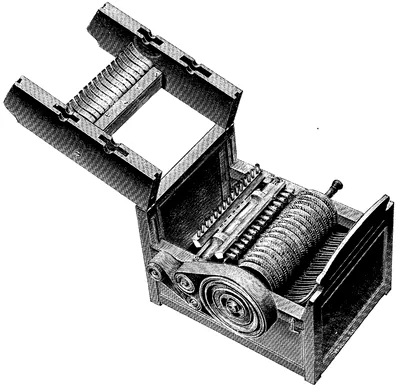
More than two centuries later, we're confronting a different version of that question.
We've lived through the Industrial Revolution and the Information Age. We have an entirely new creator economy, and now artificial intelligence is changing the way work gets made.
Yet we're still approaching labor and production with an old mentality: faster, cheaper, more output, fewer people.
Our technology has evolved. Our economy has changed.
But have the systems supporting the people doing the work changed with it?
On September 29, I attended TheWrap's AI Creator Day in Los Angeles, where executive producer Simone Ferretti and director Darin Stewart discussed the making of The Arc, a five-episode science-fiction series developed with Artlist using generative AI.
The presentation demonstrated just how dramatically technology is changing creative production.
The producers had approximately three and a half weeks to deliver the first episode, followed by an accelerated schedule of roughly two weeks for each subsequent episode, a timeline also reported by Keisha Oleaga.
The presenter was ecstatic about how quickly they were able to produce the series. How efficient the process had become. How much more content could now be produced in a fraction of the time.
And I could see the excitement. I could see the innovation and the possibilities, too.
Then, during the Q&A, someone in the audience asked about compensation and the production budget.
The director and another member of the team looked at each other and hesitated for a few seconds before answering.
To me, that pause spoke volumes.
Finally, they mentioned $15,000. Then, after another pause, they clarified that it was $15,000 in Seedance credits.
They also explained that the creatives were paid their daily rates.
And I couldn't help but feel a knot in my stomach.
While some people saw the innovation and the possibilities, which I did too, I couldn't help but wonder:
What exactly were we celebrating?
To be clear, $15,000 in credits isn't the same as $15,000 paid to the people who made the show. Nor was that figure necessarily the entire production budget. Business Insider reporter Kelsey Vlamis subsequently described approximately $38,000 in AI-tool credits across the project.
And none of those figures tells us everything about what the creatives earned, or what rights they retained.
I don't know the terms of their licensing agreements, royalties, ownership, or any continuing participation in the show's success. I'm not suggesting that the people behind The Arc were mistreated.
But their presentation raised a much bigger question for me.
Who is actually benefiting from all this efficiency?
Let's say a creative normally works on a production that takes several months to complete. They're paid a daily rate for their time.
Now imagine that the same type of production can be completed in a few weeks using AI.
Even if their day rate stays the same, they may earn considerably less because they're working fewer days. The production company saves money and finishes faster. The creative may need several projects to earn what they previously made from one—and that's assuming those projects are available.
For some artists, AI may do the opposite: make independent production affordable, open new revenue streams, and give them more ownership. I think that's exciting.
But greater productivity doesn't automatically translate into greater financial security for the people doing the work.
Lower production costs and lower creative value are not the same thing.
And we haven't even begun talking about the actors, voice actors, editors, animators, production assistants, and countless others whose labor has traditionally brought a project to life.
New jobs will emerge. New skills will matter. But that doesn't erase the contraction of existing opportunities.
The question isn't whether AI can make production more efficient. It can. It's how the people doing the work share in the value that efficiency creates.
Why do we take technology that could fundamentally change how we live and work and immediately ask how we can use it to produce more?
Companies are incentivized to reduce costs, increase output, improve margins, and generate growth. When a team can produce twice as much in the same amount of time, that productivity gain can quickly become the new expectation.
The time saved doesn't necessarily go back to the worker. The money saved doesn't necessarily go back to the creative. And the value created doesn't necessarily flow to the people whose work made it possible.
Instead, efficiency becomes another reason to demand more.
More, more, more, more, more.
But just because we have the capability to do more doesn't necessarily mean we have to do it.
We're already living in an era where there is more content available than any one person could possibly consume. AI makes it easier to add even more.
What happens when the supply of content keeps increasing but the attention available to consume it doesn't? Creatives feel pressured to publish constantly just to remain visible, adding to the very flood of work they're competing against.
We're using tools that could alleviate labor to accelerate an already exhausting content engine.
How is that sustainable?
The history of American industrialization tells us something else: when technology transforms production, the protections surrounding labor don't automatically transform with it.
In the nineteenth century, the South's expanding cotton plantations and the North's textile mills were connected parts of the same economy. As the National Park Service explains, cotton grown through enslaved labor supplied factories in New England. Wealth was being generated on both sides of that relationship.
And the conditions inside many Northern factories were brutal in their own right.
At the Lowell textile mills in Massachusetts, for example, workers—many of them young women—regularly worked twelve- to fourteen-hour days. They lived under strict rules, faced wage cuts, and could be fired or blacklisted for challenging management.
I want to be clear about something: factory wage labor and slavery were not the same system. Enslaved people were legally treated as property, denied freedom, and subjected to a system of hereditary forced labor. Wage workers, however constrained their choices might have been, were not enslaved.
But both histories reveal what can happen when the people controlling production have enormous power over the people supplying the labor.
Slavery wasn't ended by a machine or an efficiency gain. Abolitionists, enslaved people fighting for their own freedom, the Civil War, emancipation, and ultimately the Thirteenth Amendment were central to ending its legal existence in the United States.
And in Northern factories, better working conditions didn't simply appear because businesses eventually decided to become more generous.
Workers organized.
In the 1830s, women in Lowell walked out over wage cuts. In the 1840s, women such as Sarah Bagley organized and pushed for a ten-hour workday. Many of those early efforts were defeated. But workers kept organizing, and over time labor movements helped secure protections and regulations that employers had resisted.
These were different struggles, with different stakes and different outcomes.
But the lesson I take from them is this: technological progress doesn't automatically produce human progress. People have to insist that it does.
Now look at where we are.
We've created an economy where people can build audiences, distribute their work, develop intellectual property, and create businesses without relying entirely on studios, networks, and publishers.
We call it the creator economy.
Yet we're still trying to operate it using assumptions inherited from a different era.
Produce more. Do more. Optimize everything.
But it doesn't have to be that way.
People talk about the creator economy as though it has matured.
How can we call an economy mature when we haven't established consistent systems to support the people operating within it?
How should compensation work when technology changes production time? Who owns the work? Who receives royalties? What happens when a platform changes its rules, a company reuses someone's likeness, or a project keeps generating revenue long after the original fee has been paid?
Laws, contracts, unions, and business models exist. But their protections are uneven, and many independent creators lack the bargaining power available in established industries. A 2024 International Labour Organization study by Drew Gardiner documents unstable incomes, limited job security, and concentrated platform power among creative workers.
And now AI is transforming production before we've adequately answered these questions.
We need economic structures that reflect how creative work actually functions today.
That means clearer compensation standards—whether a creative is paid for time, a project, or continuing use of their work. Licensing agreements that spell out where, how long, and for what purposes work can be used. Ownership protections that clarify who controls the underlying intellectual property. Royalties or revenue participation when a creation keeps earning money. And ways for independent creatives to organize, share information, and bargain collectively where the law allows.
Those protections won't look identical for every kind of creative work. But expecting each artist to negotiate them alone isn't an economic system.
Changing our mindset is necessary.
Changing the rules matters, too.
There's another part of this conversation that we creatives need to be honest about: what we're willing to accept.
What one creative accepts doesn't happen in a vacuum. Individual deals can become reference points for what companies expect from the next person.
But not everyone has the financial freedom to reject an unfavorable deal. People have bills to pay. That's why this can't be only about telling individual artists to negotiate harder.
It's about what we can demand together.
The writers and actors who organized during the 2023 Hollywood strikes didn't stop AI from existing. They negotiated protections around its use, including provisions involving writers' credit and performers' digital likenesses.
Those agreements don't protect every independent creative. But they show that the rules aren't fixed.
We need to talk openly about money, licensing, royalties, ownership, and what happens to the value of our work after we've been paid for our time.
Exposure isn't a substitute for fair compensation. An opportunity doesn't mean we should be grateful for whatever we're handed.
Because the work doesn't exist without the people creating it.
There's one more thing I want creatives to remember.
We're no longer living in the twentieth century, when a relatively small number of studios, networks, publishers, and media companies controlled access to mass audiences.
The internet changed how media is created, distributed, and consumed. We can make our own work, reach audiences directly, develop intellectual property, and build businesses around what we create.
We have a back door now.
Does that make independent success easy? Of course not. It still takes money, resources, time, and a tremendous amount of work.
But having alternatives changes the power dynamic.
The same technologies companies are using to reduce their dependence on creative labor can give creatives more ways to reduce their dependence on those companies.
And independence isn't our only source of leverage.
We can share information about deals, establish collective expectations, join or form organizations, and demand fairer terms and a stake in the value our work continues to create.
We don't have to negotiate every opportunity as though we're lucky just to be invited into the room.
The companies need the work. And we're the ones who create it.
It's time we started acting like our work has power—because it does.
I like AI.
I think it's a powerful tool with extraordinary potential, especially for independent artists and creatives who have historically struggled to access the resources necessary to bring their visions to life.
I don't believe the answer is to reject technological advancements simply because they threaten existing ways of working.
But I do believe we need to question the economic systems and production practices surrounding them.
During the Industrial Revolution, better machinery wasn't enough to improve working conditions. Workers had to demand protections, and institutions eventually had to respond.
Today, we're being offered tools that could give us more time, more independence, and more room to create.
But if all we do with them is produce more work, for less money, with fewer people, we're carrying the same old logic into an entirely new economy.
Faster. Cheaper. More.
This is unsustainable.
If technology gives us time back, why can't some of that time stay with the people doing the work? If creatives can produce with fewer resources, why shouldn't they have greater opportunities to own and benefit from what they create?
We need more than a change in mindset. We need compensation, licensing, ownership, and labor structures that allow creative workers—not only the companies commissioning their work—to benefit from this new economy.
And creatives have a role in building those structures, together.
Because if the only outcome of revolutionary technology is more work, lower compensation, and greater pressure to produce, then what exactly have we revolutionized?
We can't use an innovative tool with the same mindset.
MLA-style references for further reading. Titles open the original sources.
New VISIONS work reaches subscribers before it appears on the website.
The finished thing matters. But sometimes the process is what gives it weight.
In the early 2000s, MTV had a show called Diary. I remember watching Destiny's Child and being completely hooked by something that sounds very normal now: access.
Artists mostly arrived to us finished. The song was mixed. The photograph was retouched. The performance was ready. We saw the magic after the uncertainty had been removed. Diary showed the hours around it: the travel, the rehearsals, the waiting, the exhaustion, the ordinary moments surrounding an extraordinary career.
And seeing the machinery did not ruin the magic. The machinery gave the magic weight.
That is what I loved about Making the Video too. A three-minute pop spectacle suddenly had a before: wardrobe, choreography, resets, technical problems, long days, decisions, people. The finished work had history. And once you have history with something, you experience the result differently.
Making the Band took that even further. The formation became part of the entertainment. By the time Danity Kane released an album, the audience was not meeting five strangers. People had watched them audition, train, struggle, get chosen, build relationships and become the group.
The music still had to be good. Process did not replace product. It changed the context around it. Showing the process gives people a history with the work.
VISIONS / What We See
Process becomes provenance.
That matters even more now because the finished surface tells us less than it used to. An image can look expensive and have taken seconds. A voice can sound human and not belong to a human. A paragraph can be polished without anybody having sat with the idea for very long.
That does not make synthetic media automatically bad. It makes provenance more interesting.
Who made this? What choices are inside it? What did they try? What did they throw away? What changed their mind? What did it cost them to get here? What could only have come from this person?
That is why I keep thinking process becomes provenance.
Not every behind-the-scenes clip. Not constant access. Not turning the artist into content while they are trying to make the actual work. Some things need privacy. Some things need time underground.
But when the process reveals real stakes—judgment, craft, uncertainty, revision, transformation—it gives the audience something the final release cannot create retroactively: history.
And history can create familiarity. Familiarity can create belief. Not automatically. There is no formula that says “post behind the scenes, receive trust.” That would be ridiculous.
Human beings value effort differently when we can see the effort.
Human beings value effort differently when we can see the effort. We understand an outcome differently when we know what it took. Call it effort signaling.
And when synthetic output becomes more abundant, evidence of human judgment may become part of the value itself.
That is why Lily House makes selected parts of the invisible middle visible. Not everything. The meaningful parts: the collaborator joining the work, the question that changes direction, the setback, the experiment, the moment something clicks, the thing we thought the project was before it became something else.
The becoming.
By the time the finished work arrives, the audience has not only been marketed to. They have context. They have memory. They have a history with it.
The final release does not arrive as a stranger.
That is why the process matters. Not because unfinished is automatically authentic. Because becoming has stakes.
The finished thing matters. But sometimes the process is what gives it weight.
New VISIONS work reaches subscribers before it appears on the website.
The creator economy has been legitimized. It is stabilizing. It has not fully matured. The next phase depends on creators recognizing the capital they already hold—and on the institutions working with them changing the way they do business.
At AI Creator Day at UCLA on September 29, we were obviously there to talk about AI: what it can make, how quickly it can make it and what happens when the barrier between having an idea and actually making the thing keeps getting smaller.
But another conversation kept surfacing throughout the day.
The creator economy has grown up.
Hollywood is partnering with creators. Brands are putting serious money into creator campaigns. Agencies have built businesses around representing them. Creators are developing shows, products, intellectual property and companies of their own.
One of the speakers was Oren Rosenbaum, Partner and Co-Head of UTA Creators. His session was literally called “The Agent’s Playbook: Building the Creator Business.” The session focused on creators with the potential to build lasting businesses and the deals and partnerships that can help them scale. After the event, Rosenbaum described UTA’s approach as looking beyond whether a deal simply pays and toward whether it helps a creator accomplish what they are actually trying to build.
Not building the creator’s following.
Not finding the next sponsored post.
Building the creator business.
That distinction says almost everything about how far this industry has come.
But I kept thinking about the language we were using.
Has the creator economy actually matured?
I don’t think it has.
I think it is stabilizing.
And those are two very different things.
People have called the creator economy the Wild West for years.
Fine. Let’s stay with that metaphor.
The first generation of breakout creators were pioneers. They were figuring out the terrain while they were building on it. There was no established career path, no real playbook and no guarantee that millions of people watching you on the internet could become anything resembling a sustainable career.
Then people realized there was gold here.
And everyone rushed in.
Creators, brands, agencies, platforms, investors.
For a while, the creator economy really did resemble a gold rush: enormous opportunity, enormous attention and enormous amounts of money moving through a market that was still trying to understand what anything was worth.
But gold rushes don’t last forever.
Eventually, people stop simply rushing toward the opportunity and start building around it.
That is where the creator economy feels like it is now.
The frontier is not empty anymore. The saloons are going up. So are the roads and the banks. People are putting down roots.
At its inaugural CreatorFronts this month, IAB argued that the next stage of creator advertising depends on reducing friction and building stronger infrastructure around measurement, comparability, buying and standards.
We are not trying to prove the land exists anymore.
We are figuring out how to live on it.
The creator economy is stabilizing.
That matters.
But stabilization and maturity are not the same thing.
Pull quote
A TOWN BEING BUILT IS NOT A FINISHED CITY.
The creator economy has been legitimized.
The money is real. The careers are real. The companies are real. Hollywood is paying attention. Brands are paying attention.
IAB says U.S. creator ad spend is expected to reach about $44 billion in 2026, up from $13.9 billion in 2021. That is more than triple in five years. Nearly half of creator ad buyers already call creators a “must buy.”
That is legitimacy.
Maturity is something else.
Legitimization is recognition.
Stabilization is what happens when some of the volatility begins to settle and patterns emerge.
Maturation is what happens when the infrastructure, standards and business practices around an economy become developed enough to support what has been built.
We are on our way there.
We are not there yet.
Pricing remains inconsistent. Procurement systems frequently do not fit the businesses brands are trying to hire. Rights and usage can still be poorly understood. Measurement remains enough of a challenge that IAB continues to identify better standards, tools and operational infrastructure as priorities for the industry.
That is not evidence that the creator economy is failing.
It is evidence that it is still forming.
Turning 18 technically makes you an adult.
It does not mean you are finished growing.
So yes, the creator economy has grown up.
But let’s not pick the fruit too early just yet.
There is also a question buried inside the word legitimacy.
Legitimized by whom?
Creators did not suddenly become valuable when Hollywood started calling.
Their audiences had already decided they were valuable.
That is why Hollywood started calling.
For decades, traditional entertainment controlled many of the dominant doors to mass cultural attention. If you wanted a television show, a nationally distributed movie, a giant production budget or access to millions of viewers at once, there were only so many places you could go.
Creators built other doors.
And audiences walked through them.
Deloitte’s March 2026 Digital Media Trends data found 55% of Gen Z respondents say social media content is more relevant to them than traditional TV and movies, while 52% say they feel a stronger personal connection to social media creators than to TV personalities or actors.
That is cultural capital.
Hollywood has capital too. It has financing, production infrastructure, distribution, institutional relationships, expertise and a century of reputation behind it. Creators can benefit enormously from proximity to that machinery.
But Hollywood needs something too.
It needs the audience relationship creators built outside of it. It needs cultural fluency. It needs people who understand communities and how audiences behave now.
Deloitte’s 2026 Media and Entertainment Industry Outlook tells traditional media companies to treat creators as business partners who can extend intellectual property, deepen audience engagement and unlock audience segments those companies may not otherwise reach.
So this is not Hollywood generously deciding the kids on the internet are legitimate now.
It is an exchange.
Hollywood has institutional capital.
Creators have cultural capital.
Creators are still chasing legitimacy from institutions that are increasingly turning to creators to strengthen their own cultural relevance.
We still treat a creator’s proximity to Hollywood as proof that the creator has made it.
But Hollywood’s increasing proximity to creators is also evidence of how much power creators have already accumulated.
Institutional prestige and present-day cultural power are not the same thing.
The audience moved.
A decade ago, the basic creator model made sense.
A creator built an audience. A brand wanted access to that audience. The brand hired the creator to make something. Everyone checked the impressions. Then everyone moved on to the next campaign.
Brief. Deliverable. Post. Impressions. Next campaign.
We built a commercial system around treating creators as talent and their audiences as inventory.
Except the person receiving that brief may now be operating an entire business.
And when you misclassify what somebody is at the beginning, everything downstream gets distorted.
Pricing gets distorted because we are trying to put one number on several different kinds of value. Procurement gets messy because the creator does not fit neatly into the category the company built for them. Negotiations get confusing because one side may believe it is hiring talent while the other is licensing intellectual property, providing production and bringing an audience relationship into the deal.
Then everyone reaches measurement and wonders why the numbers do not tell the whole story.
The mismatch exists on the creator side too.
Creators still talk about becoming “full-time content creators” as if they are clocking into a new job.
You are not going full-time into a job.
You are going all in on your business.
When you leave your day job, nobody becomes your new employer.
You became the business.
Visa’s 2025 Creator Report, based on a Morning Consult survey of 1,067 creators across five countries, found 68% considered themselves small-business owners and 88% expected their businesses to grow over the following year. Yet 86% were still using personal funds, savings or credit cards to finance their creator work, while 26% said they needed help with financial management, contract negotiations and tax or legal compliance.
The identity has changed faster than some of the operating behavior.
And you can see that in the way we talk about success.
Virality is attention. It is not infrastructure.
A million followers can be evidence of enormous reach and still fail to become durable capital.
Sometimes there was never a larger business opportunity there. Not every viral moment is a company waiting to happen.
But sometimes the opportunity was there and the creator never saw it as one.
The attention never became something durable. The audience never became a relationship the creator could carry somewhere else. The popularity never became intellectual property, recurring demand or a business that could survive once the algorithm moved on.
That does not mean every creator needs to launch a skincare line because a video went viral.
It means attention and enterprise are not the same thing.
Does the audience come back? Do they trust you? Will they follow you somewhere else? Is there something you can own, sell, license or build from that relationship?
Or was it simply a very successful piece of content?
Both outcomes are fine.
They are just not the same outcome.
Having an audience and building a business from that audience are two different skills.
If the business side is not your strength, find somebody whose strength it is. Creators do not need to become accountants and attorneys overnight.
They do need to understand what they are building.
What we see
YOU ARE TRYING TO FIT A BUSINESS INTO INFRASTRUCTURE BUILT TO HIRE TALENT.
This is where the old power dynamic becomes easiest to see.
How many creators have we heard say they will make something for free just to get their foot in the door?
Are you trying to be an intern?
I thought we got past the unpaid internship.
There is a difference between strategically investing your own resources in an opportunity and continuously giving away your work because you hope somebody eventually decides it deserves to be paid for.
And that behavior does not only affect the person who accepts the deal.
Markets learn from repeated behavior.
When free creative labor repeatedly becomes the price of entry, buyers learn what creators may be willing to tolerate.
At scale, exceptions become expectations.
The company is not automatically doing you a favor because it wants access to your work, ideas or audience.
The question is whether the exchange makes sense.
That is not arrogance.
That is positioning.
Once creators see themselves differently, the institutions working with them have to adjust too.
A creator partnership cannot keep operating like a talent opportunity when the person on the other side may be bringing a business, production capability, intellectual property, cultural intelligence and a direct audience relationship into the deal.
The creator is no longer simply waiting to be chosen.
They are evaluating whether the economics, scope, rights and opportunity make sense for what they are building.
Brands and entertainment companies have to make the same adjustment.
The creator sitting across from you may have started filming videos in their bedroom.
That does not mean you are granting them an opportunity.
You may be buying from a business whose most valuable asset is a relationship with people your company is trying to reach.
That changes the balance at the table.
Which brings us to one of the biggest complaints in creator marketing.
Measurement.
How do we prove ROI? How do we attribute sales? How do we know whether this worked?
IAB found that 39% of brands named proving ROI among their top three creator-measurement challenges, 34% cited attributing sales and 32% cited tracking long-term impact or loyalty.
But measurement comes after a much more basic question.
What did you buy?
A sponsored post is not the same thing as an intellectual-property license. Production is not distribution. Audience reach is not audience trust. Hiring someone to appear in an ad is not the same thing as bringing them in because they understand a customer you have struggled to reach.
So why would one measurement framework explain all of those relationships?
If the objective is awareness, measure awareness. If the objective is sales, measure sales. If the creator was brought in because they understand a community your company does not, define what successfully reaching that community actually means.
And if you are building something together for a year, evaluating the relationship based on what happened to one post during its first week makes absolutely no sense.
Maybe creators are not uniquely impossible to measure.
Maybe companies are trying to measure business relationships like media placements.
That is a different problem.
Creators have responsibility here too.
“I have 300,000 followers” is information.
It is not a business proposition.
The business proposition is what that relationship allows you to do.
What does your audience trust you for? What can you help a company understand, make, sell or reach that it cannot easily do by itself?
The tension
CREATORS ARE STILL CHASING LEGITIMACY FROM INSTITUTIONS THAT INCREASINGLY NEED THEIR AUDIENCES.
This is also why the creator economy cannot fully mature on brand deals alone.
If the primary economic model is creators waiting for companies to decide when they deserve to be paid, we have not built much of an economy.
We built a talent market.
CreatorIQ’s 2026 State of Creators, based on a survey of 5,095 creators across 100 regions, found 67% earned less than $10,000 from content creation over the previous year, and for 62%, it was not their primary source of income.
At the same time, 50% had launched or planned to launch a brand of their own.
That tells us something about where the creator economy is going.
The brand deal makes more sense as one source of revenue inside a creator business than as the entire business.
The economy becomes deeper when creators can build durable businesses underneath the content and when infrastructure grows around those businesses.
That is maturation.
This is why we are still operating like it is 2016.
The landscape changed faster than the way everyone sees their position inside it.
Creators are still entering rooms like talent hoping to be selected.
Brands are still approaching creators like media inventory waiting to be bought.
Hollywood still holds tremendous institutional power and prestige.
But prestige built during an earlier media era is not the only kind of capital in the room anymore.
Creators possess something brands and traditional entertainment increasingly need: a direct relationship with audiences.
Hollywood has infrastructure and institutional capital. Brands have financial capital and commercial scale. Creators have cultural capital and audience relationships.
A mature creator economy understands that all of those things can be true at once.
Creators benefit from what Hollywood and brands can provide. Hollywood and brands benefit from what creators have built.
The relationship has to become less about access being granted and more about value being exchanged.
Less talent-to-institution.
More business-to-business.
The creator economy never needed Hollywood to make it real.
Its audience had already done that.
What it needs now is the infrastructure—and the mindset—to understand what that relationship is worth.
The creator economy is already in 2026.
Our behavior has to get there.
New VISIONS work reaches subscribers before it appears on the website.
We have endless stories about becoming an adult. Far fewer about what happens when the life you built stops fitting.
I am approaching 40, and I keep noticing how often stories about women jump from young adulthood to retirement with very little curiosity about everything in between.
As though ambition disappears.
As though reinvention becomes less interesting.
As though motherhood, divorce, caregiving, career changes, grief, creativity, money, friendship, sexuality, and starting again are side plots instead of entire lives.
I love a coming-of-age story.
But where are the starting-over stories?
Where are the stories about being 38, 42, 47 and realizing the life you spent years building no longer fits?
Where are the stories about changing your mind?
About leaving the marriage. Leaving the career. Starting the business. Moving somewhere new. Deciding you do not want the life you were told you were supposed to want.
What happens after coming of age?
For years, I thought maybe this was just me getting older and becoming harder to please.
It is not just me.
AARP research found that 64% of women 50 and older say they rarely or never see themselves represented in today’s media. The same body of research found that 68% of women 50-plus say they have grown completely or very much into their authentic selves with age.
That contradiction is hard to ignore.
Media seems to care less about women once we stop being fertile—as if when our eggs die, so do we.
And curiously, that is also the precise moment many women say they understand themselves more clearly than ever before.
The problem is not simply that women disappear from the screen.
It is that the range of stories we are allowed to have seems to shrink.
We become the mother. The wife. The grandmother. The boss. The person helping someone younger become who they are.
Apparently, everyone else still gets to have a coming-of-age story.
We are expected to have arrived.
But we are still becoming, too.
For a long time, adulthood was presented as a fairly predictable sequence: career, romance, marriage, motherhood, and then some vague period where a woman was apparently supposed to gracefully fade into the background.
That is the script.
It is not necessarily the life.
Some women marry. Some do not. Some have children. Some do not. Some have them later. Some divorce. Some fall in love again. Some leave careers at 45. Some start companies at 50. Some become caregivers. Some stop being caregivers. Some move across the country because they can.
At some point, many of us arrive at a question we may not have known how to ask at 25:
What do I actually want?
Even the old assumption that motherhood will organize every woman’s adulthood no longer holds the way it once did. Pew Research has documented a growing share of adults under 50 who expect not to have children; among women in that group, simply not wanting children is one of the most common reasons.
That does not mean motherhood matters less.
It means there are more visible versions of adulthood now.
The lives changed.
The stories should have changed with them.
When I think about the shows I still return to, I think about Living Single. Sex and the City. The Golden Girls. Insecure.
I am not saying they were perfect representations of every woman. They were not.
I am saying they gave women room to have lives.
Friendship was a story.
Ambition was a story.
Money was a story.
Sex was a story.
Being unsure was a story.
Starting over was a story.
Becoming someone different from the person you thought you would be was a story.
And yes, Grace and Frankie exists. I know.
But one show cannot carry an entire missing chapter of womanhood.
Why does it sometimes feel like media jumps from young womanhood straight to older womanhood and simply skips the entire universe in between?
There is this whole stretch of life where women are changing enormously, and culture acts like it is somehow less interesting because it is not the first time something has happened.
Your second beginning can be every bit as consequential as your first.
Maybe more.
Because this time you know what things cost.
Women in this season are not waiting to fade into the background.
We are building companies. Changing careers. Raising children. Choosing not to have them. Leaving relationships. Entering relationships. Caring for parents. Traveling alone. Returning to ourselves. Learning things we were once too afraid to try.
Even entrepreneurship, one of culture’s favorite youth myths, tells a different story. U.S. Census research found that the average founder was 41.9 years old at the time of founding; among the fastest-growing new ventures, the average was 45.
So this is not simply a plea for representation because representation is nice.
I am not asking media to invent these women.
We are already here.
The lives are already happening.
The stories are already there.
What seems to be missing is curiosity.
The media gap is not simply a lack of women on screen.
It is a lack of stories that recognize how much becoming still happens after the age culture considers most marketable.
VISIONS / What We See
Women are not aging out of culture. We are aging out of media that understands us.
The women did not disappear.
And maybe that is the real problem.
Not that women of a certain age have stopped becoming interesting.
That too much of media stopped looking.
New VISIONS work reaches subscribers before it appears on the website.
Hollywood isn't dead. We are in the uncomfortable middle of watching it become something else.
VISIONS / Signal
NOT DEAD.
CHANGING
FORM.
The old system is contracting. The functions are moving.
What we see
GROWTH
DOES NOT
FEEL GOOD.
Revival does not have to look like restoration.
For the past few years, people have been saying that Hollywood is dead.
I have been one of them.
But the more I look at what is happening, the more I think we may be describing it wrong.
What people don't understand, or maybe what I didn't understand, is that nothing really just dies or goes away.
It transforms. It evolves. It changes.
Sometimes that change happens slowly enough that we barely notice it. Other times it happens so quickly that it feels like everything is falling apart at once.
And when you are stuck in the middle of that transformation, it does not feel inspiring.
Growth does not feel good.
When we think about growth, our instincts are to think about the end product. The transformation. The glow-up. The thing blooming on the other side.
We don't usually talk about the long nights, the fear, the crying, the doubt, the money you lost, the job you no longer have, or the moment when you genuinely wonder whether you have ruined everything instead of changing it.
They call them growing pains for a reason.
And I think that is where Hollywood is right now.
Or, at least, versions of it have.
By the late 1940s, Hollywood's studio system was already under enormous pressure. The studios lost their exhibition monopoly after antitrust action. Television began pulling audiences away from movie theaters. Ticket sales fell. By the 1960s, the old system, with its enormous production facilities and long-term contract talent, had largely come to an end.
If you worked inside that system, I imagine it probably felt like Hollywood was dying.
It wasn't. It was changing form.
A new generation of filmmakers began making movies differently. Easy Rider, completed independently and later distributed by Columbia, was made for roughly $400,000 and grossed nearly $20 million. Its success helped fuel interest in personal, low-budget movies made outside conventional Hollywood.
Black filmmakers and Black audiences were part of that shift too. Movies like Sweet Sweetback's Baadasssss Song and Shaft proved there was an audience Hollywood had grossly underestimated.
That doesn't mean blaxploitation single-handedly saved Hollywood. History is messier than that.
The answer wasn't one thing.
The system broke apart and reorganized itself. Then it did it again.
We do this every time a new technology arrives.
Television was going to kill movies. Video was going to kill radio. Streaming was going to kill television. Social media was going to kill entertainment. AI is going to kill artists.
But technology rarely arrives, wipes the board clean and leaves nothing behind. It changes how we interact with the thing.
Music videos didn't make musicians irrelevant. They expanded the visual language around music. Streaming didn't eliminate movies or television. It changed distribution, business models and audience behavior.
Social media did not eliminate entertainment. It created another entertainment infrastructure entirely.
Now that infrastructure is colliding with Hollywood.
And yes, the collision hurts.
VISIONS / Signal
The creative economy contracted.
Creative workers grew.
This is where I do not want to bullshit anyone.
Hollywood is in a real crisis.
Los Angeles film and television production has contracted dramatically. The source research behind this essay shows regional film shoot days falling nearly 50% since 2019, roughly 57,000 motion-picture and sound-recording jobs lost in Los Angeles County over four years, and more than 80 production-service businesses closing since 2022.
Those are not abstract numbers. Those are people.
People who built sets. People who rented equipment. People who edited. People who drove trucks. People who fed crews.
People who spent twenty or thirty years learning how to do something extraordinarily well and are now asking whether the industry they built their lives around still has a place for them.
We cannot ignore that because it makes our argument inconvenient.
Growth hurts. Transformation has casualties.
Sometimes an industry evolves and a company closes anyway. Sometimes a new opportunity emerges somewhere else while the person standing in front of you still cannot pay their rent.
Both things can be true.
And this is where things get interesting, because the same data showing contraction is also showing something else.
Otis College's 2026 report on California's creative economy found that the state lost 22,300 creative-economy jobs in 2025, a 2.9% decline. But during that same year, the number of core creative workers grew 2.1%.
Read that again.
The creative economy contracted. Creative workers grew.
This distinction matters.
Entertainment is not Hollywood.
Hollywood is one institution inside entertainment. And entertainment itself is not disappearing.
The appetite is still there. The money is still there. The audience is still there.
Where the audience goes, how the money moves and who gets to make the work?
That is what is changing.
Look at creators. Look at vertical microdramas. Look at creator-led long-form and short-form projects. Look at filmmakers using practical craft in the middle of a technological acceleration.
Evolution is not always forward in a straight line.
Sometimes the future reaches backward and pulls an old craft into a new context. Sometimes technology makes us value the physical more. Sometimes streaming makes theatrical movies feel like events. Sometimes digital creators become studios. Sometimes studios become partners to creators.
The job underneath all of it is still remarkably familiar:
Make something somebody wants to experience.
This summer complicated the death narrative even more.
The 2026 North American summer box office had its strongest summer since 2013, with ticket sales up sharply from the year before. The Odyssey became one of the films driving that momentum, while audiences showed up for large-format theatrical experiences in numbers the industry has been desperate to see again.
That does not mean Hollywood went back to normal.
The production ecosystem is still disrupted. Jobs have still disappeared. Businesses have still closed. The old machinery has not simply restarted exactly where it left off.
But there are inklings of life.
And I think that matters because revival does not have to look like restoration.
Maybe what comes back is not the thing we lost. Maybe it is something reorganized around different audience habits, different economics, different formats, and a renewed appetite for experiences that actually feel worth leaving the house for.
Something can die in one form and still return with a different shape.
And the most interesting signs are not only the movies that are working.
They are the new routes being built around them.
AMC Theatres, historically an exhibitor, launched Leawood Films in August 2026: a distribution company focused on fully financed or already-completed films that need a route into theaters. AMC says the company will use its exhibition, marketing, and distribution expertise to expand the supply of films for theaters in the U.S. and internationally.
Think about what that means.
A theater chain is moving upstream into distribution because there are finished films and filmmakers who still need a path to audiences.
Warner Bros. has also re-entered the specialty-film space with Clockwork, a new label built around singular filmmakers and theatrically minded work. Its announced slate includes Sean Baker's Ti Amo! alongside projects from filmmakers including Park Chan-wook.
Paramount is rebuilding its acquisition pipeline too. In late 2025 it hired independent producer Lia Buman to lead global acquisitions and a revitalized Republic Pictures, bringing acquisitions and the specialty label under one structure to expand the studio's relationship with the independent ecosystem.
And the change is not only happening in film acquisition and distribution.
Legacy media companies are building creator infrastructure directly into their businesses. FOX Creator Studios is developing creator-led scripted and unscripted work across long- and short-form formats. BET, inside Paramount, launched the BET Creator Studio as a digital-first platform for culture-forward creators, pairing talent with production support and distribution.
None of these moves proves that Hollywood has figured out what comes next.
AMC's Leawood Films has not even selected its first releases yet. New labels can fail. Creator divisions can become another corporate experiment. Specialty pipelines can disappear just as quickly as they return.
But look at the pattern.
An exhibitor becomes a distributor.
A major studio rebuilds a specialty label.
Another studio expands its acquisitions pipeline around independent films.
Legacy media companies create divisions around creator-led IP and direct audience relationships.
The old system is not simply shrinking. It is redistributing functions.
That is what transformation looks like before it has a clean name.
There is another reason this moment feels so awful.
Psychologists call it intolerance of uncertainty.
It describes the difficulty people can have responding to situations when important outcomes are unknown.
We know what is disappearing because we can see it. The production company closes. The job posting doesn't exist anymore. The studio lot is quiet. The show doesn't get renewed. AI suddenly does something in thirty seconds that used to take a person hours.
Those losses are visible.
What is replacing them is often still weird, fragmented, unproven and unnamed.
So we stand in the middle looking backward at something fully formed and forward at something we can barely make out.
Of course the thing behind us feels more real. We know what it was.
We do not know what this is yet.
That doesn't mean we can positive-think our way out of structural problems. It does not bring jobs back. It does not reopen a business. It does not mean every technological change is good.
It means perspective matters.
This is the moment where we choose what we focus on.
Not what exists. What we focus on.
We do not get to pretend the uncomfortable parts are not happening. We should look directly at them. We should document the losses. Fight for workers. Ask hard questions about AI, ownership, labor, compensation and who gets to benefit from whatever comes next.
But once we acknowledge those things, we still have a choice.
Do we stare only at what is disappearing?
Or do we also look for what is trying to emerge?
Because both are happening at the same time.
The old world and the new world are not politely taking turns.
They are crashing into each other.
Stories move. Audiences move. Money moves. Power moves. Tools change. Institutions reorganize.
But human beings keep doing this stubborn little thing where we make things and then find other human beings to share them with.
That part doesn't seem to be dying at all.
What is it
becoming?
Because growth does not look beautiful while it is growing.
A seed has to split open before anything comes out of it.
There is dirt everywhere.
There are roots moving in directions no one standing above the ground can see yet.
And for a while, there is absolutely no evidence of a flower.
That does not mean nothing is happening.
It means we are early.
This is what we see.
Do you see what we see?
Selected source trail from the working essay
New VISIONS work reaches subscribers before it appears on the website.
Maybe the attention crisis is not really an attention crisis. Maybe it is a creativity crisis.
A confession
WHERE THE HELL
IS PART SEVEN?
The fruit is silly. The human impulse underneath it is not.
I have an embarrassing confession.
I watch AI slop on TikTok.
Specifically, the ridiculous AI soap operas where pieces of fruit fall in love, cheat on each other, discover secret families, get pregnant, betray their friends, and somehow leave a strawberry emotionally devastated at the exact moment the episode ends.
The animation is uneven.
The writing is atrocious.
I know this.
And yet I am in the comments asking where the hell part seven is.
That is the part I cannot stop thinking about.
Because we have spent years repeating the same diagnosis about audiences: their attention spans are gone.
Everything has to be shorter. Faster. Hook them in three seconds. Get to the point. Cut the intro. Cut it again.
And somehow an absurd sixty-second fruit melodrama can convince me to watch one episode, then another, then another, then dig through a comment section because somebody forgot to link the continuation.
That does not look like the absence of attention.
It looks like attention behaving differently.
If I watch twenty one-minute episodes in a row, what exactly is my attention span?
One minute?
Or did the story earn twenty minutes of sustained attention by giving me twenty reasons to keep going?
Short-form distribution and short attention are not the same thing.
An episode can be short while the viewing relationship is long.
A cliffhanger can turn sixty seconds into a session. A recurring character can turn one accidental view into return behavior. A familiar format can create expectation. A story can keep accumulating attention in pieces.
We keep measuring the unit. Maybe we should be measuring the relationship.
I know this because I can watch television for hours when the story has me.
I binged Seasons 1 and 2 of House of the Dragon. I was in it. Then somewhere around the middle of Season 3, I noticed myself drifting. The show was still playing, but I was back on TikTok.
Then I watched all three seasons of The Gilded Age and I was sat. When I reached the end, I did not feel relieved that I had finished three seasons of television. I wanted more. Then I found out I had to wait for Season 4.
Same person. Same phone. Same supposedly terrible attention span.
Different story relationship.
That makes me wonder whether our attention spans have actually collapsed, or whether our tolerance for storylines that are not holding us has gotten shorter.
Maybe we have less tolerance for crappy storylines.
STORY STILL WORKS.
The funniest part of the AI fruit soap opera is how little of its storytelling machinery is new.
Cliffhangers are old. Serialized stories are old. Recurring characters are old. Melodrama is extremely old.
“So what happens next?” may be one of the oldest retention strategies human beings have.
The technology changed the container. It did not invent curiosity.
That is why I do not think the lesson here is that AI slop is secretly great or that the future of storytelling belongs to sentient produce.
The lesson is simpler.
Story still works.
Character still works. Conflict still works. Progression still works. A reason to return still works.
There is something very convenient about blaming the audience.
If viewers have “no attention span,” then the problem lives inside us.
Not the writing.
Not the sameness.
Not the flat visuals.
Not the gloomy blue color grade that makes half of prestige television feel like it was filmed inside the same rain cloud.
Not the opposite problem either, where everything is so aggressively yellow you start wondering whether the entire cast has jaundice.
Not the storylines that somehow made it out of the 1990s and never left: the idiot husband with the wife who is obviously too good for him, the woman whose life still seems to orbit finding a man, the same familiar faces, the same character types, the same emotional beats with better cameras.
At some point, repetition stops feeling comforting and starts feeling lazy.
The short-attention-span story turns a creative problem into a consumer defect.
But what if audiences did not suddenly lose the ability to care?
What if we just became less tolerant of being bored?
That changes the creative question from How short should this be? to Why should somebody want the next episode?
That question cannot be solved by cutting another six seconds from the intro. It asks whether there is a character worth following, a tension worth resolving, a world worth returning to, a visual language worth looking at, or simply enough surprise, honesty, pleasure, or curiosity in the experience that a person wants more.
And television is not the only place this happened.
Social media used to feel like an escape. It was weird. Funny. Messy. People made things because they wanted to make things.
Now too much of the feed feels like QVC with better lighting.
Buy this. Go here. Do not eat there. Eat here instead. Wear this. Shop this. Breathe like this. Here are five places you absolutely need to visit before somebody else tells you the same five places tomorrow.
Even “authenticity” started developing a house style.
The problem is not that commerce exists. Media has always had advertising. The problem is when the commercial logic becomes so dominant that everything begins to feel optimized into the same shape.
You can scroll through hundreds of technically competent videos and still feel like you did not see anything.
That is not an attention shortage. That is a creativity shortage.
Because the second I find something good, my attention mysteriously comes back.
I binge. I obsess. I search for the next episode. I sit through the credits. I go looking for interviews. I tell somebody else to watch it.
I am not trying to escape the story. I am trying to find my next hit.
Which is why the whole conversation can start to feel backwards.
Television has become the DEA, rationing the good shit, and then blaming the audience for wandering off while we wait for the next dose.
Maybe we are not broken.
Maybe things are boring.
Maybe the attention crisis is partly a creativity crisis.
VISIONS / Point of view
MAYBE WE’RE NOT DISTRACTED.
MAYBE WE’RE BORED.
Put the bottom line before the creative long enough, and eventually there is less reason for anyone to stay.
Profit is downstream of attention. And attention is often downstream of creativity.
Creativity is often the thing that makes the business model work in the first place. It hooks the audience. It creates the obsession. It creates the thing people quote, share, return to, pay for, and tell somebody else about.
Commerce is not the enemy of creativity. The mistake is believing creativity is something you add after the business model works.
But can we at least make it entertaining?
Get your bag. Get your money.
And again, I do not blame creators.
Then everybody figured out how to monetize it.
YouTube became powerful because it opened the door to an absurd variety of voices, formats, obsessions, aesthetics, and people who would never have made it through a traditional gatekeeper. TikTok felt new because it was unpredictable. Social media felt like discovery.
The work still has to be good.
Maybe we got so obsessed with optimization, efficiency, IP protection, data, and predictable returns that we forgot the thing all those systems are supposed to support.
Maybe we got lost in the sauce.
Which means maybe the industry's reflexive story about distracted audiences lets the creative side off too easily.
It proves something more useful: the audience is still there, still watching, and still responsive when programming gives them a reason to care.
None of that proves one company is boring and another is creative.
And Nielsen shows the audience moving between all of them. In May 2026, YouTube held 13.8% of U.S. TV watch-time, Disney held 10.0%, Netflix held 8.0%, and Paramount Streaming reached 2.3%. Paramount's streaming usage rose 7% from April as new programming and library titles drove viewing.
Paramount gives us the other side of the argument. Paramount+ reported its best retention quarter in the service's history, with double-digit growth in view hours, roughly 2 million subscriber additions in Q2 to 81.6 million, and 16% year-over-year Paramount+ revenue growth. Paramount explicitly credited programming including Dutton Ranch, UFC, and the FIFA World Cup for that performance.
Disney's numbers tell a different version of the same story. Its Entertainment SVOD business became significantly more profitable in fiscal Q3, with operating income rising to $712 million from $329 million a year earlier. Disney also says it still sees an opportunity to increase engagement and retention, reduce churn, improve search and discovery, triple local original series over the next three years, bring creator content from TikTok into Disney+, and rethink the product experience. In the same quarter, Disney acknowledged that The Mandalorian and Grogu and live-action Moana underperformed its box-office expectations.
Netflix is still an enormous business. Q2 revenue grew 13% year over year to $12.6 billion, and the company reported more than 97 billion hours watched in the first half of 2026. But view hours grew only 2% year over year. Netflix calls engagement healthy, and financially it is. The point is not that Netflix is failing. The point is that an audience capable of spending 97 billion hours watching video is obviously still capable of paying attention.
The harder story is that the companies changed too.
The easiest story is that the audience changed.
And if the goal becomes optimizing risk out of everything, eventually creative difference starts getting treated like inefficiency.
It cannot tell you why something feels alive.
It cannot give you a point of view.
It cannot manufacture taste.
Data can tell you what somebody clicked. What they finished. What they skipped. What they replayed.
But somewhere along the way, too much of the business started treating the data and the bottom line as the creative brief instead of information that should support the creative brief.
Data is useful. Profit matters. Media companies are businesses, and creators deserve to make money from their work.
There is another part of this that I do not think we talk about enough.
It changed how story reaches us.
A viewer no longer has to make the same conscious decision to begin a series. Sometimes a story arrives inside a feed between a joke, a news clip, a friend’s video, an ad, and somebody explaining their divorce.
That makes the first encounter easier.
But easy discovery does not create sustained attention by itself.
The story still has to do something after it arrives.
It has to earn the next swipe in its direction instead of away from it.
That is what the ridiculous fruit soap operas accidentally understand.
They are asking me one thing: Do you want to know what happens next?
Apparently, embarrassingly, yes.
AI slop is not the future of media.
But our willingness to keep watching it may be exposing something about the present.
People still want stories. They still want characters they recognize. They still want tension, beauty, surprise, specificity, mess, humor, and something they have not already seen twelve times.
They still want to come back.
The technology changed. The distribution changed. The screen changed.
The human appetite underneath all of it remains remarkably familiar.
So before we decide audiences can no longer pay attention, maybe we should ask whether we gave them something worth paying attention to.
Before we blame shrinking attention spans, maybe we should audit the writing, the images, the repetition, the incentives, and what we are actually asking people to stay for.
And before we keep making everything shorter simply because the platform allows it, maybe we should remember that people will still give hours to something that makes those hours feel worth it.
We diagnosed the audience. We should have audited the programming.
For the larger media model behind this behavior, continue with The Era of Social Streaming.
This is what we see.
Source trail
New VISIONS work reaches subscribers before it appears on the website.
On losing the plan, learning to need people, and building the kind of support she couldn’t find.
The person behind the first Pod
Jhaynane (pronounced JAY-NAAN) Bastien did not set out to become the protagonist of her own work. After a car accident changed the shape of her days, the project that began as a way to document recovery became a larger question about what happens when the life you planned stops being available to you.
What followed became In Search Of… Healing, Lily House Studio, and a different way of thinking about making work: less alone, less polished, and more interested in what it actually takes to become.
01What did the accident change about the life you thought you were supposed to have?
Before the accident, I was working on a completely different project. I had pictured my life as being much easier than it turned out to be. I thought once I got that project off the ground, everything would click into place, and I would be further along by now.
What I was really holding onto was a specific outcome for how life was supposed to turn out. That’s not how life actually works, and that was a hard truth I resisted for a very long time.
There’s that saying that when you make a plan, God laughs. That’s how I see life now. I can make a plan and work toward it to the best of my ability, but I’ve loosened my grip on control enough to let life surprise me. For somebody who hates surprise parties—or surprises in general—that has been a very challenging adjustment.
02Why did getting outside start to feel so important?
Being stuck inside those four walls made me crave being outside. I’m a homebody—I love being home—but being pretty much bedridden for months will make even an introvert want to run outside.
I wanted to revisit places that had given me escape or freedom before, and finally go to the bucket-list places I kept putting off because life always happened. I got tired of life happening to me. I wanted to start living life.
“I got tired of life happening to me. I wanted to start living life.”
03Why the American West?
Once I knew I wanted to get outside, the West became part of the search. I wanted to learn from the people I met, their stories of resilience, and the places themselves.
I’m from Maryland, right outside Washington, D.C. I can tell you the story of the thirteen colonies back to back. But I’ve lived on the West Coast for at least ten years and still know so little about the American West. I wanted to finally go to the places I kept putting off and understand more of the region I had been living in. That curiosity became part of the journey too.
04Why did you finally let yourself become the protagonist?
I didn’t set out to tell my story right away. My focus was the people I met—their stories, communities, work, experiences. I put myself in the background.
But as I worked on it, the story felt empty. Why was I going on this trip? Why was I meeting these people? What was my purpose in the story?
That’s when I realized every good story needs a protagonist, and the protagonist just happens to be me. The audience needed an anchor. Without one, they would meet a new group of people every episode with nothing connecting it all. I had to be that anchor.
What changed
I had to stop believing I had to do everything on my own.
05What did you have to stop believing about yourself in order to start over?
I had to stop believing that needing other people meant I was incapable. For a long time, I equated being competent with being able to handle everything myself. I’ve had to loosen my grip on that.
I live in Los Angeles, and I don’t have a real support system here. Most of the people I know are on the East Coast or somewhere else in the world. After surgery, a friend came up from San Diego to help me. I didn’t ask her to, but I had to learn to be okay with receiving that help instead of immediately trying to prove I could manage without it.
That has probably been one of the harder parts of starting over: learning that independence and isolation are not the same thing.
06What would have happened if you never made this project?
I would have lost my mind.
This project was my escape. I haven’t been able to sit for long periods of time or stand for long periods of time, and for a while I couldn’t type normally either. I’ve spent so much time on my couch trying to navigate doctors, insurance, paperwork, pain, and everything in between.
Being locked in a house staring at white walls for hours will do something to you. I needed somewhere for my mind to go. Social media wasn’t doing it, and the endless streaming catalog definitely wasn’t doing it. The project gave me somewhere to put my attention and imagination.
07What are you trying to get back—and what are you okay leaving behind?
I stopped believing in “getting back to normal” a long time ago. Having my daughter taught me that first. There’s no way to go backward. What I want now is to get back to baseline—to live without chronic pain.
I want to sit comfortably in a chair and watch a movie. I want to hug my daughter and carry her before she gets too big. I want to type with my index finger and my thumb again instead of finding workarounds for basic things I never used to think about.
The part of myself I’m trying to get back is my ability to move through the world without constantly negotiating with my body. I’m a doer. When you’re a doer and suddenly you can’t do as much as you want to do, it messes with your identity.
What I’m okay leaving behind is the hyper-independence. I see the necessity of having a support system now. Doing it all on your own is not what it’s cracked up to be.
“The project gave me somewhere to put my attention and imagination.”
The small things
I just want my body back.
08When did you realize the story was bigger than something you could make alone?
Joshua Tree was supposed to be a nine-minute YouTube video. Nothing too fancy. But once we were on the road, talking to people and seeing these communities, it was like a lightning strike hit me in the head: there’s a real story here.
I was trying to be the host, the producer, and the director—trust me, I tried. But those are different jobs, and the bigger the story became, the more obvious it was that trying to hold every role myself was limiting the work.
That was the moment I understood the project needed more than my vision. It needed people with their own expertise who could make the story better than I could make it alone.
09Why are you willing to let people see the messy part?
I’ve always loved hearing stories about people who made it, but my question is always: how did they get there? That’s why I love memoirs. And obviously I’m not the only person who cares about process. People watch other people learn to bake sourdough, watch how candy is made, watch behind-the-scenes footage from their favorite shows. I loved Unwrapped on Food Network.
People like to see how things become what they become. The process makes you trust people and grow a connection. It’s not the most beautiful part—or at least not the part we usually celebrate—but it has its purpose.
And yes, it’s scary. You’re showing failures and the unpolished parts of yourself. It’s raw. It’s honest. It’s human. Didn’t Adam and Eve freak out when they realized they were naked? That’s what showing the process can feel like. You’re naked for people to see you.
But it’s also a little exhilarating. Maybe I’m an exhibitionist.
Why Lily House
If they won’t show us, I will.
10Why did Lily House have to exist?
I built Lily House because I got tired of seeing people who had “made it” tell the rest of us to just believe in ourselves, like belief is the only thing it takes. Belief matters, but belief is not infrastructure.
I’m somebody who loves to learn and observe. Don’t just tell me to believe. Show me your process. Show me what it took for you to get where you are—the team, the resources, the mistakes, the decisions, the things nobody sees once the finished work is out in the world.
But if they won’t show us, I will.
That’s why Lily House exists: to build the team, resources, and infrastructure around artists so the artist does not have to become an entire company just to make the work. The vision can stay with the artist without requiring them to carry every function on their back—or their heart.
11What do you hope someone believes after watching In Search Of… Healing?
I hope I plant a seed that they can start believing something else is possible in their future—that the future doesn’t always have to feel terrifying or doom and gloom.
But belief isn’t passive. They still have to take the necessary steps toward the future they actually want to live, not the one fear tells them is attainable.
12What are you still figuring out?
Life.
There’s a song my daughter and I listen to from Frozen II, “When I Am Older,” and there’s a line I absolutely love at the end: “Because when I’m older, absolutely everything will make sense.”
And it doesn’t.
I think that’s the beauty of life—figuring it out for yourself. Nobody has all the answers. And if somebody tells you they know everything, they’re lying.
Still becoming
Life.
So what’s next?
In Search Of… Healing is becoming the first Lily House Pod: a story built with the people, disciplines, and infrastructure needed to let the work grow beyond what one person can carry alone.
The point is not to make the process look effortless. The point is to make the process visible.
New VISIONS work reaches subscribers before it appears on the website.