Lily House Studio
A studio about growth.
VISIONS / BUSINESS / CREATOR ECONOMY
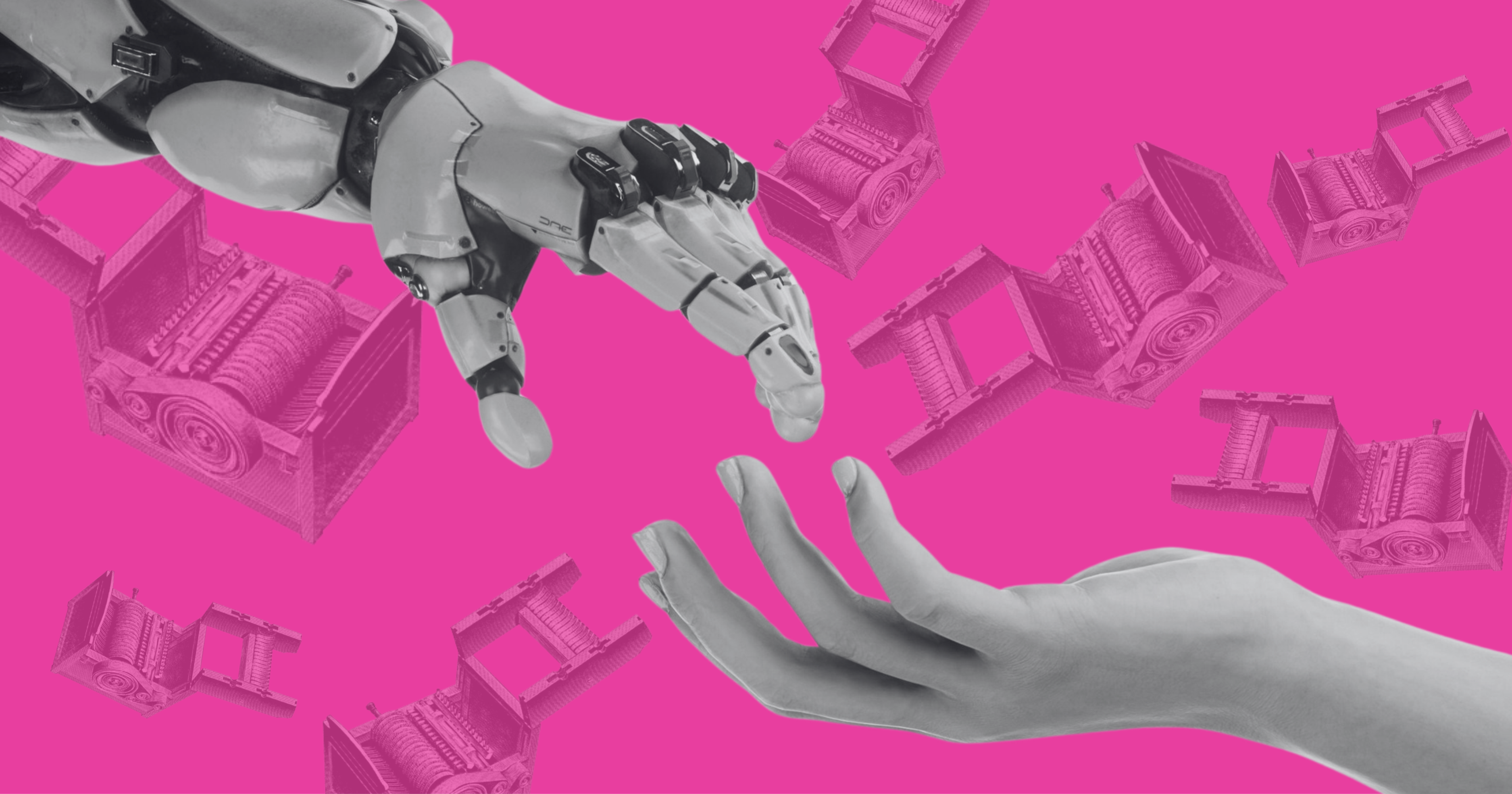
VISIONS editorial artwork for What Does the Cotton Gin and AI Have in Common?

What Does the
Cotton Gin and AI
Have in Common?

Technology has changed how we create. But the economic systems surrounding that work haven't kept up.

In 1793, Eli Whitney developed the cotton gin, a machine that dramatically reduced the labor required to separate cotton fibers from their seeds.

It was a revolutionary invention. A process that previously required hours of manual labor could now be completed in a fraction of the time.

According to the National Archives article “Eli Whitney’s Patent for the Cotton Gin”, Whitney believed that by reducing the need for manual labor, his invention might help bring an end to slavery.

But sadly, the exact opposite happened.

The cotton gin made cotton production more profitable, encouraging plantation owners to expand their operations. More land was cultivated, more cotton was grown, and the demand for enslaved labor increased.

And slavery didn't just expand. As the National Museum of African American History and Culture documents, cotton plantations enforced increasingly demanding quotas through violence. A technological advancement that could have reduced the amount of work required instead helped expand a system built on exploitation.

And I fear that unless things change dramatically, we may be repeating the same mistake with AI.

The cotton gin wasn't responsible for the decisions made by the people who controlled it. It was the economic system surrounding the technology, and the people who benefited from that system, that determined how it would be used.

Why do we continue developing tools that could alleviate labor, only to use them to demand more of it?
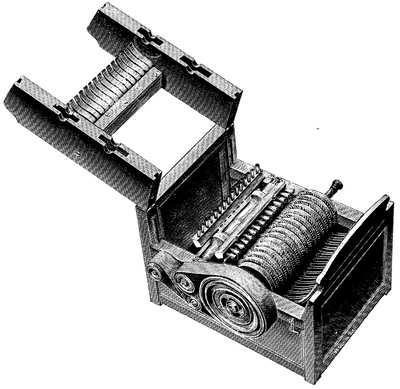
Historical cotton gin machinery used to separate cotton fibers from their seeds
Fig. 1. The cotton gin mechanized the separation of cotton fibers from their seeds, radically increasing the speed of processing. Image reference: Encyclopaedia Britannica, “Cotton gin”. Image-specific credit and reuse rights should be confirmed with the rights holder.

More than two centuries later, we're confronting a different version of that question.

We've lived through the Industrial Revolution and the Information Age. We have an entirely new creator economy, and now artificial intelligence is changing the way work gets made.

Yet we're still approaching labor and production with an old mentality: faster, cheaper, more output, fewer people.

Our technology has evolved. Our economy has changed.

But have the systems supporting the people doing the work changed with it?

WHAT IT ACTUALLY TAKES TO MAKE AN AI SERIES

On September 29, I attended TheWrap's AI Creator Day in Los Angeles, where executive producer Simone Ferretti and director Darin Stewart discussed the making of The Arc, a five-episode science-fiction series developed with Artlist using generative AI.

The presentation demonstrated just how dramatically technology is changing creative production.

The producers had approximately three and a half weeks to deliver the first episode, followed by an accelerated schedule of roughly two weeks for each subsequent episode, a timeline also reported by Keisha Oleaga.

The presenter was ecstatic about how quickly they were able to produce the series. How efficient the process had become. How much more content could now be produced in a fraction of the time.

And I could see the excitement. I could see the innovation and the possibilities, too.

Then, during the Q&A, someone in the audience asked about compensation and the production budget.

The director and another member of the team looked at each other and hesitated for a few seconds before answering.

To me, that pause spoke volumes.

Finally, they mentioned $15,000. Then, after another pause, they clarified that it was $15,000 in Seedance credits.

They also explained that the creatives were paid their daily rates.

And I couldn't help but feel a knot in my stomach.

While some people saw the innovation and the possibilities, which I did too, I couldn't help but wonder:

What exactly were we celebrating?

To be clear, $15,000 in credits isn't the same as $15,000 paid to the people who made the show. Nor was that figure necessarily the entire production budget. Business Insider reporter Kelsey Vlamis subsequently described approximately $38,000 in AI-tool credits across the project.

And none of those figures tells us everything about what the creatives earned, or what rights they retained.

I don't know the terms of their licensing agreements, royalties, ownership, or any continuing participation in the show's success. I'm not suggesting that the people behind The Arc were mistreated.

But their presentation raised a much bigger question for me.

Who is actually benefiting from all this efficiency?

WHEN EFFICIENCY STARTS COSTING CREATIVES MONEY

Let's say a creative normally works on a production that takes several months to complete. They're paid a daily rate for their time.

Now imagine that the same type of production can be completed in a few weeks using AI.

Even if their day rate stays the same, they may earn considerably less because they're working fewer days. The production company saves money and finishes faster. The creative may need several projects to earn what they previously made from one—and that's assuming those projects are available.

For some artists, AI may do the opposite: make independent production affordable, open new revenue streams, and give them more ownership. I think that's exciting.

But greater productivity doesn't automatically translate into greater financial security for the people doing the work.

Lower production costs and lower creative value are not the same thing.

And we haven't even begun talking about the actors, voice actors, editors, animators, production assistants, and countless others whose labor has traditionally brought a project to life.

New jobs will emerge. New skills will matter. But that doesn't erase the contraction of existing opportunities.

The question isn't whether AI can make production more efficient. It can. It's how the people doing the work share in the value that efficiency creates.

WHY IS MORE ALWAYS THE GOAL?

Why do we take technology that could fundamentally change how we live and work and immediately ask how we can use it to produce more?

Companies are incentivized to reduce costs, increase output, improve margins, and generate growth. When a team can produce twice as much in the same amount of time, that productivity gain can quickly become the new expectation.

The time saved doesn't necessarily go back to the worker. The money saved doesn't necessarily go back to the creative. And the value created doesn't necessarily flow to the people whose work made it possible.

Instead, efficiency becomes another reason to demand more.

More, more, more, more, more.

But just because we have the capability to do more doesn't necessarily mean we have to do it.

We're already living in an era where there is more content available than any one person could possibly consume. AI makes it easier to add even more.

What happens when the supply of content keeps increasing but the attention available to consume it doesn't? Creatives feel pressured to publish constantly just to remain visible, adding to the very flood of work they're competing against.

We're using tools that could alleviate labor to accelerate an already exhausting content engine.

How is that sustainable?

THE PROTECTIONS DIDN'T BUILD THEMSELVES

The history of American industrialization tells us something else: when technology transforms production, the protections surrounding labor don't automatically transform with it.

In the nineteenth century, the South's expanding cotton plantations and the North's textile mills were connected parts of the same economy. As the National Park Service explains, cotton grown through enslaved labor supplied factories in New England. Wealth was being generated on both sides of that relationship.

And the conditions inside many Northern factories were brutal in their own right.

At the Lowell textile mills in Massachusetts, for example, workers—many of them young women—regularly worked twelve- to fourteen-hour days. They lived under strict rules, faced wage cuts, and could be fired or blacklisted for challenging management.

I want to be clear about something: factory wage labor and slavery were not the same system. Enslaved people were legally treated as property, denied freedom, and subjected to a system of hereditary forced labor. Wage workers, however constrained their choices might have been, were not enslaved.

But both histories reveal what can happen when the people controlling production have enormous power over the people supplying the labor.

Slavery wasn't ended by a machine or an efficiency gain. Abolitionists, enslaved people fighting for their own freedom, the Civil War, emancipation, and ultimately the Thirteenth Amendment were central to ending its legal existence in the United States.

And in Northern factories, better working conditions didn't simply appear because businesses eventually decided to become more generous.

Workers organized.

In the 1830s, women in Lowell walked out over wage cuts. In the 1840s, women such as Sarah Bagley organized and pushed for a ten-hour workday. Many of those early efforts were defeated. But workers kept organizing, and over time labor movements helped secure protections and regulations that employers had resisted.

These were different struggles, with different stakes and different outcomes.

But the lesson I take from them is this: technological progress doesn't automatically produce human progress. People have to insist that it does.

WE BUILT A NEW ECONOMY. WHERE ARE THE SYSTEMS TO SUPPORT IT?

Now look at where we are.

We've created an economy where people can build audiences, distribute their work, develop intellectual property, and create businesses without relying entirely on studios, networks, and publishers.

We call it the creator economy.

Yet we're still trying to operate it using assumptions inherited from a different era.

Produce more. Do more. Optimize everything.

But it doesn't have to be that way.

People talk about the creator economy as though it has matured.

How can we call an economy mature when we haven't established consistent systems to support the people operating within it?

How should compensation work when technology changes production time? Who owns the work? Who receives royalties? What happens when a platform changes its rules, a company reuses someone's likeness, or a project keeps generating revenue long after the original fee has been paid?

Laws, contracts, unions, and business models exist. But their protections are uneven, and many independent creators lack the bargaining power available in established industries. A 2024 International Labour Organization study by Drew Gardiner documents unstable incomes, limited job security, and concentrated platform power among creative workers.

And now AI is transforming production before we've adequately answered these questions.

We need economic structures that reflect how creative work actually functions today.

That means clearer compensation standards—whether a creative is paid for time, a project, or continuing use of their work. Licensing agreements that spell out where, how long, and for what purposes work can be used. Ownership protections that clarify who controls the underlying intellectual property. Royalties or revenue participation when a creation keeps earning money. And ways for independent creatives to organize, share information, and bargain collectively where the law allows.

Those protections won't look identical for every kind of creative work. But expecting each artist to negotiate them alone isn't an economic system.

Changing our mindset is necessary.

Changing the rules matters, too.

THE BARE MINIMUM DOESN'T HAVE TO BE THE STANDARD

There's another part of this conversation that we creatives need to be honest about: what we're willing to accept.

What one creative accepts doesn't happen in a vacuum. Individual deals can become reference points for what companies expect from the next person.

But not everyone has the financial freedom to reject an unfavorable deal. People have bills to pay. That's why this can't be only about telling individual artists to negotiate harder.

It's about what we can demand together.

The writers and actors who organized during the 2023 Hollywood strikes didn't stop AI from existing. They negotiated protections around its use, including provisions involving writers' credit and performers' digital likenesses.

Those agreements don't protect every independent creative. But they show that the rules aren't fixed.

We need to talk openly about money, licensing, royalties, ownership, and what happens to the value of our work after we've been paid for our time.

Exposure isn't a substitute for fair compensation. An opportunity doesn't mean we should be grateful for whatever we're handed.

Because the work doesn't exist without the people creating it.

THE INDUSTRY NO LONGER HOLDS ALL THE CARDS

There's one more thing I want creatives to remember.

We're no longer living in the twentieth century, when a relatively small number of studios, networks, publishers, and media companies controlled access to mass audiences.

The internet changed how media is created, distributed, and consumed. We can make our own work, reach audiences directly, develop intellectual property, and build businesses around what we create.

We have a back door now.

Does that make independent success easy? Of course not. It still takes money, resources, time, and a tremendous amount of work.

But having alternatives changes the power dynamic.

The same technologies companies are using to reduce their dependence on creative labor can give creatives more ways to reduce their dependence on those companies.

And independence isn't our only source of leverage.

We can share information about deals, establish collective expectations, join or form organizations, and demand fairer terms and a stake in the value our work continues to create.

We don't have to negotiate every opportunity as though we're lucky just to be invited into the room.

The companies need the work. And we're the ones who create it.

It's time we started acting like our work has power—because it does.

THE TECHNOLOGY HAS EVOLVED. HAVE OUR SYSTEMS?

I like AI.

I think it's a powerful tool with extraordinary potential, especially for independent artists and creatives who have historically struggled to access the resources necessary to bring their visions to life.

I don't believe the answer is to reject technological advancements simply because they threaten existing ways of working.

But I do believe we need to question the economic systems and production practices surrounding them.

During the Industrial Revolution, better machinery wasn't enough to improve working conditions. Workers had to demand protections, and institutions eventually had to respond.

Today, we're being offered tools that could give us more time, more independence, and more room to create.

But if all we do with them is produce more work, for less money, with fewer people, we're carrying the same old logic into an entirely new economy.

Faster. Cheaper. More.

This is unsustainable.

If technology gives us time back, why can't some of that time stay with the people doing the work? If creatives can produce with fewer resources, why shouldn't they have greater opportunities to own and benefit from what they create?

We need more than a change in mindset. We need compensation, licensing, ownership, and labor structures that allow creative workers—not only the companies commissioning their work—to benefit from this new economy.

And creatives have a role in building those structures, together.

Because if the only outcome of revolutionary technology is more work, lower compensation, and greater pressure to produce, then what exactly have we revolutionized?

We can't use an innovative tool with the same mindset.

Works Cited

MLA-style references for further reading. Titles open the original sources.

  1. “Artificial Intelligence.” Writers Guild of America West, 18 Dec. 2025.
  2. Cobb, Kayla, et al. “Deepfakes, AI Shorts and YouTube OGs: Best Moments from TheWrap’s AI Creator Day.” TheWrap, 30 Sept. 2026.
  3. “The Cotton Economy.” National Park Service, 25 May 2025.
  4. “Eli Whitney’s Patent for the Cotton Gin.” Prologue, vol. 36, no. 3, fall 2004, National Archives and Records Administration.
  5. Gardiner, Drew. Balancing Act: The Role of Digital Platforms in Shaping the Conditions of Creative Work. International Labour Organization, 22 Aug. 2024.
  6. “Keeping the Workforce Human in the Age of A.I..” SAG-AFTRA, 7 May 2024.
  7. “The Mill Girls of Lowell.” National Park Service, 3 Dec. 2025.
  8. Oleaga, Keisha. “How ‘The Arc’ Made an AI Series in Weeks.” What’s Trending, 4 Oct. 2026.
  9. “A Punishing System.” Searchable Museum, National Museum of African American History and Culture.
  10. “Sarah Bagley.” National Park Service, 18 Feb. 2025.
  11. Vlamis, Kelsey. “Creators of an AI-Generated Sci-Fi Series Said It Took $38,000 in AI Credits and 8 to 10 Generations per Shot.” Business Insider, 11 Oct. 2026.