Lily House Studio
A studio about growth.
VISIONS / BUSINESS / CREATIVE ENTREPRENEURSHIP
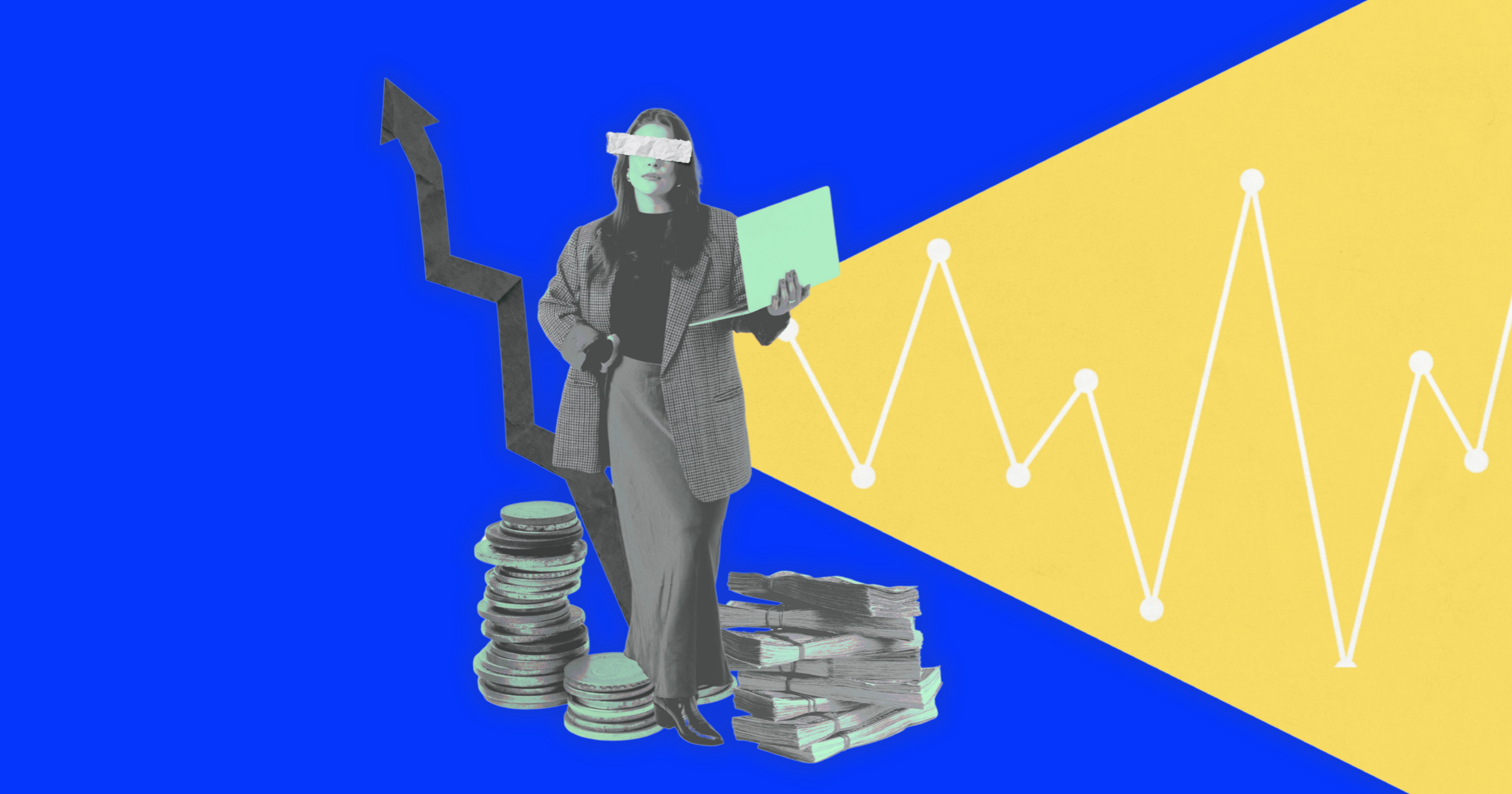
Editorial artwork about creative entrepreneurship and the next generation of founders

The Next Wave of Successful Entrepreneurs Will Not Come From Tech. They’ll Be Creatives.

The next generation of founders is already creating. What happens when artists, filmmakers, and designers begin seeing their projects as the foundation for something bigger?

On October 3, my birthday, I attended an Artists as Entrepreneurs panel at Fuser in Los Angeles. I went because I'm not the only one who has noticed that creatives are the next founders. I wanted to hear from people who had already taken that leap.

The panel included Charles Broskoski, co-founder of Are.na, and Dalena Tran, an artist and filmmaker who co-founded Fuser with Hirad Sab. The conversation was less about whether these artists considered themselves entrepreneurs and more about the companies they had already built. Their creative experiences had led them to businesses beyond the projects they originally made.

I'm glad creatives are finally waking up to what they can build and lead. Soon enough, investors and other industries who tend to be three steps behind will catch up and notice as well.

And the opportunity goes far beyond the creative industries. Technology is changing what people can build, and creative vision is becoming more important to what gets built.

YOU MAY ALREADY BE RUNNING A BUSINESS

Creative industries often teach you to see yourself as the person hired to produce a project, not the person capable of leading a company.

Consider what your work already requires. If you're an independent filmmaker, you may develop budgets, hire collaborators, negotiate agreements, manage schedules, and coordinate production. Independent designers manage clients, rates, expenses, and contracts. Photographers handle equipment, crews, licensing, and client relationships.

These are business operations, even if you've never called yourself an entrepreneur.

For many independent creatives, freelancing is entrepreneurship by another name.

The structure of creative industries reinforces a different identity. The artist is called talent. The filmmaker is hired for a production. The designer is commissioned to deliver a campaign. Finish the project, get paid, move on, and find the next opportunity.

That structure teaches you to think about the next job or project rather than what could grow from the work you've already created.

You might know how to budget a film but not how to build a production company that can sustain future films. You may already be managing an independent practice without knowing how to grow it beyond your own labor.

There is a difference between knowing how to run a project and understanding the business behind it. Cash flow, financing, intellectual property, contracts, company structure, marketing, ownership, and continuing revenue require knowledge beyond the skills needed to complete the work.

And the expertise required changes as an idea grows.

WHY CREATIVE VISION AND BUSINESS JUDGMENT NEED EACH OTHER

Knowing how to make an existing business more efficient is different from imagining what it could become. Creative thinking asks what is possible, what is missing, and what could exist. Financial, technical, and operational thinking helps determine what it will take to make that possibility work.

They are not opposing forces. They balance each other.

Disney's animation Renaissance illustrates what can happen when these skills work together. The Little Mermaid helped launch that era in 1989, bringing together animators, filmmakers, the Broadway storytelling of Howard Ashman and Alan Menken, and executives who understood financing and production. They were adapting a familiar fairy tale, but the achievement was in imagining a new way to bring it to life.

Decades later, Disney demonstrated how those responsibilities could be separated. Its 2020 restructuring centralized distribution and financial accountability outside its content-producing divisions. In 2023, the company returned more of that responsibility to creative business leaders.

Those decisions reveal how the power to develop an idea and the power to determine its commercial future can sit in different places.

If Hollywood is an industry built on the arts, why isn't creative vision the force leading it?

The challenge is not choosing creativity over financial logic. It's understanding that a business needs both, without allowing yesterday's commercial successes to define the limits of tomorrow's possibilities.

CREATIVITY IS MORE THAN A JOB TITLE

The creative has always been the Renaissance man, the one who wears many hats. Creativity means more than being able to tell a story or make visual art. It is also the ability to connect different disciplines, see beyond established ways of doing things, and recognize possibilities other people may overlook.

Leonardo da Vinci was a painter, but he was also an anatomist, architect, engineer, and student of the natural world. His drawings connected artistic observation with scientific and mechanical investigation. He did not approach art and invention as unrelated forms of thinking.

Centuries later, Steve Jobs spoke about bringing technology together with the liberal arts and humanities. In his 2005 Stanford commencement address, he explained how studying calligraphy later influenced typography on the Macintosh.

But the story of Apple also requires Steve Wozniak.

Wozniak designed the Apple I and Apple II computers. He was an inventor with his own technical imagination, not simply someone carrying out Jobs's instructions. Jobs recognized the possibility of bringing personal computing to a wider market and helped turn their work into a business. Wozniak's engineering, Jobs's product and commercial judgment, and the contributions of other people were all essential.

The person who recognizes an opportunity does not always possess every skill required to execute it. And the person who understands how to make something work may also see possibilities the founder hasn't considered. Each contributes to what the business can become.

VISIONS / Perspective

Steve Jobs · 2011 · Source

WHEN MORE PEOPLE CAN BUILD, WHAT BECOMES VALUABLE?

Historically, a creative with an idea for a software product needed access to specialized technical talent and significant resources before beginning to bring that idea to life. Those requirements haven't disappeared, but AI-assisted development and vibe coding are making it easier to create prototypes, build tools, and test possibilities.

Deloitte's 2026 software industry outlook describes software creation becoming faster and cheaper, with new AI-native companies increasing competition. In Stack Overflow's 2026 Developer Survey, about 66% of respondents to its workplace AI tools question reported using AI coding assistants or agents.

Turning a prototype into a dependable company still requires engineering, security, customer relationships, and operations. More accessible tools also create room for people who never considered starting a technology company.

A filmmaker might encounter a problem in production that could be solved with software. A designer might recognize a need that existing platforms overlook. An artist might imagine a different way for people to learn or collaborate.

As more people gain access to the tools of production, the ability to make something is only part of what makes it valuable.

When more people can build, what becomes valuable?

The ability to understand people, identify what is missing, connect ideas across disciplines, and recognize what is worth creating becomes more consequential. The next generation of founders could emerge from creative backgrounds and build companies in technology, media, education, or industries that have yet to take shape.

But seeing the opportunity is only the beginning.

WHAT IF YOUR PROJECT COULD BECOME THE BUSINESS?

What if that project could become the thing that sustains you and grows into something bigger?

A film could become the foundation for a production company. An artist's research could develop into a publication. A creative practice could become a studio. The process of making something could reveal a problem worth solving through an entirely different product.

Issa Rae began with the independently created web series The Misadventures of Awkward Black Girl. Her work eventually expanded into Insecure and HOORAE, a company developing and producing work across media. The original project was one expression of a perspective that could support a larger enterprise.

A project is something you bring into the world. A business is the structure that allows you to keep creating, earning, and developing what comes next.

The important shift is learning to see beyond the first expression of an idea.

If you're exploring a business opportunity, you need to understand what you want to create, why it matters, and who it is for. As your idea develops, different questions emerge. How will you finance it? What will you own? Where will revenue come from after the first project? Who needs to be involved? What will allow you to create the next project without starting from nothing?

The skills you need to imagine an idea aren't necessarily the ones you'll need to finance, produce, operate, or grow it. Your identity has to expand, and so does your understanding of what each stage requires.

Even if you intend to move between individual projects, understanding contracts, compensation, licensing, and intellectual property helps you make informed decisions before signing agreements that determine what happens to your work.

Putting on a business hat does not mean taking off the creative mind. Business knowledge gives you more say in what you build, what you keep, and where your work might lead.

It also helps you recognize when you need somebody else's expertise.

LEARNING TO ORCHESTRATE

A filmmaker does not personally operate every camera, compose every score, or edit every scene. A creative founder developing a technology company does not necessarily need to write every line of code. The leader has to understand the vision, communicate it, bring the right people together, evaluate the work, and make decisions as the idea takes shape.

That is the ability to orchestrate.

ORCHESTRATE. To bring together distinct people, skills, and resources around a vision, and guide their work toward making it real.
VISIONS / Field Note · Creative leadership

Orchestration means recognizing the different skills required and coordinating the people and resources capable of bringing a vision into reality. Knowing how to lead also means recognizing what you do not know and learning enough about the business to make sound decisions.

You already spend much of your creative life connecting ideas, working across disciplines, and making things from what you have available. There is no reason to limit those abilities to fulfilling somebody else's vision.

The next wave of successful entrepreneurs will come from creatives who are currently thinking about how to get one film made, one book published, one collection released, or one creative idea funded.

Creatives have to begin thinking bigger and seeing more of themselves.

Not only what you can make today, but what your work could become, and what you need to learn to lead it.


YOUR VISION MAP · A FREE WORKBOOK

Have a dream project?

If money wasn't an issue, what would you bring to life?

Maybe there's an idea you can't stop thinking about, but you don't know how to make it happen yet.

YOUR VISION MAP · STEP ONE

THINK BIG,
BITCH.

Before you worry about the how, give yourself permission to see the whole vision. Start with what's possible.

Sign up for Letters from the House and we'll send Step One to your inbox. Fill out the interactive workbook in your browser and download your completed PDF, or download a blank copy to keep for later.

Step One is free. No purchase required.

Sources + further reading

Primary sources and additional context for this editorial. The thesis and interpretations are the author’s.

  1. Fuser, Artists as Entrepreneurs event
  2. Library of Congress, The Little Mermaid (1989)
  3. Disney, 2020 Media and Entertainment Reorganization
  4. Disney, 2023 Restructuring and Creative Accountability
  5. Royal Collection Trust, Leonardo da Vinci: A Life in Drawing
  6. Stanford University, Steve Jobs's 2005 Commencement Address
  7. The New Yorker, Jobs on Technology and the Humanities (2011)
  8. Computer History Museum, Steve Wozniak and Apple
  9. Deloitte, 2026 Global Software Industry Outlook
  10. Stack Overflow, 2026 Developer Survey AI Data
  11. HOORAE
  12. Related VISIONS editorial, Creator Economy Is in 2026